
Capsized in 22 Minutes — The Miracle on the Mississippi
At twelve twenty-six on Friday, November the thirteenth, 2026, a tanker lost its steering on the Mississippi at New Orleans. Its rudder locked hard to starboard. Two minutes later, it drove straight into a docked riverboat with 190 people on board. The riverboat took on water, rolled over, and capsized in about twenty-two minutes. And yet, by the end of that day, every single person was accounted for.
Key Facts
- At 12:26 p.m. on Friday, 13 November 2026, the tanker Atlantic Asphalt suffered a steering casualty near the Crescent City Connection in New Orleans and struck the riverboat American Heritage at about 12:28.
- The American Heritage capsized in about 22 minutes. One hundred and ninety people were aboard — 140 passengers and 50 crew — and everyone survived. Governor Jeff Landry called it a “miracle on the Mississippi.”
- The American Heritage, a 300-foot sternwheel paddlewheeler, had tied up at the Thalia Street wharf. The Atlantic Asphalt is a tanker about 160 metres long, built in 2017 and registered in the Marshall Islands.
- The NTSB recovered the tanker’s voyage data recorder the next day and has said it does not yet know what caused the steering to fail.
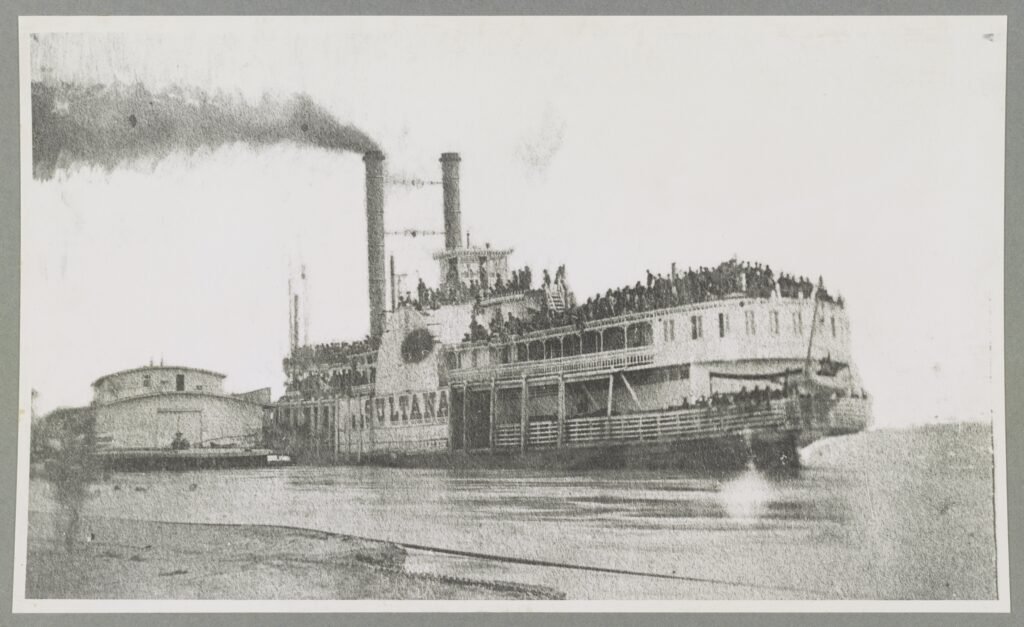
- On 27 April 1865, the steamboat Sultana’s boilers exploded shortly after she left Memphis. She was legally allowed 376 people but had more than 2,000 aboard. Contemporary counts put the dead at about 1,800; the National Park Service cites an estimate of 1,169.
Table of Contents
This is the story of those twenty-two minutes — and of another day, 161 years earlier, when this same river swallowed a steamboat in the deadliest maritime disaster in American history, and almost nobody noticed.
Two Ships on an Ordinary Morning
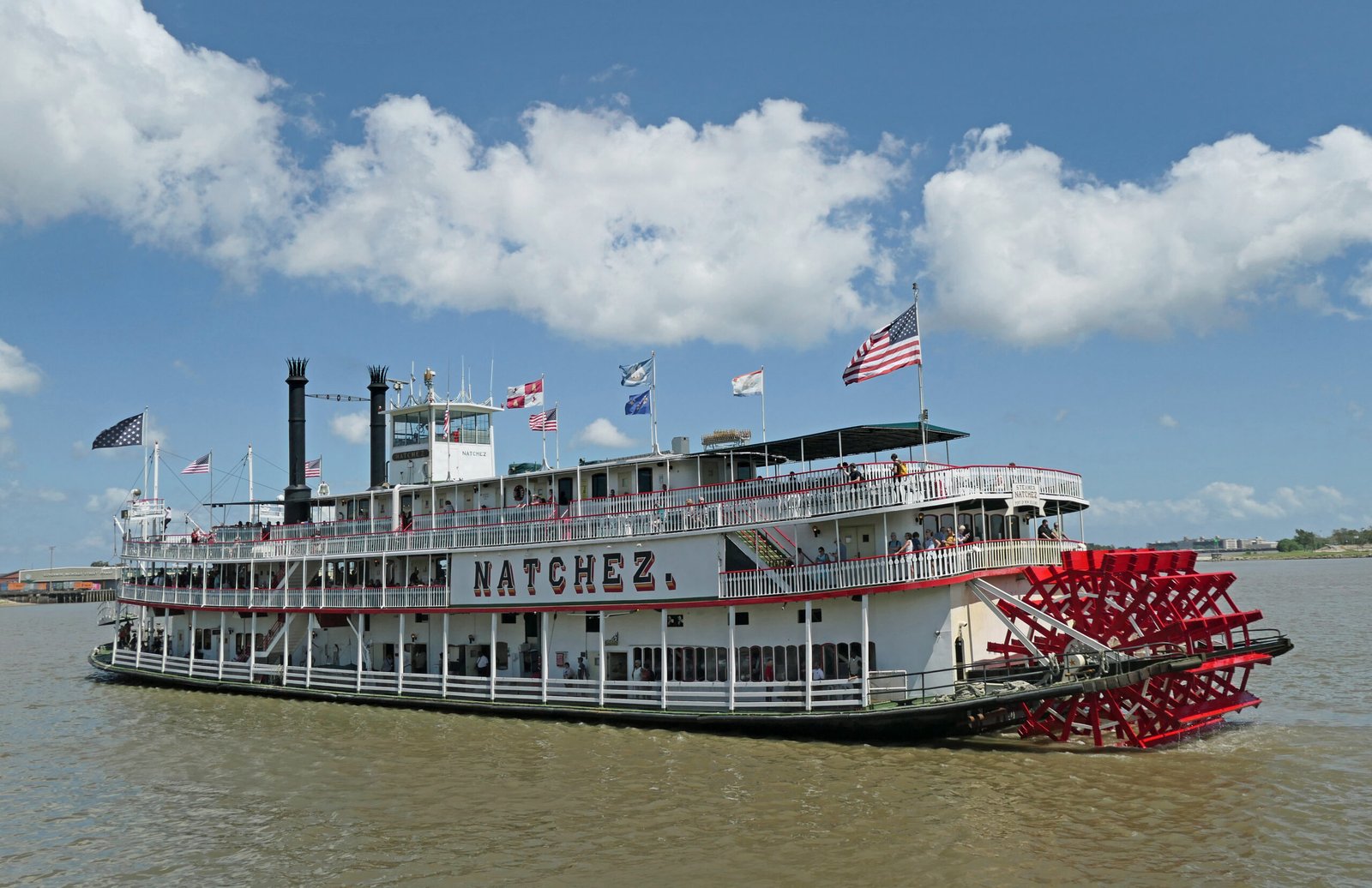
That Friday morning, the riverboat American Heritage came into New Orleans and tied up at the Thalia Street wharf. She was finishing an eight-day cruise along the Mississippi in Louisiana and Mississippi. On board were 140 passengers and 50 crew. The passengers had begun to disembark; suitcases were coming off. A holiday was ending the way holidays are supposed to end — quietly, at a dock, in the middle of an ordinary day. Nothing about that morning suggested that within hours this ship would be lying on her side in the river, and her passengers fighting to stay afloat.
At about eleven o’clock that same morning, a very different ship got under way. The Atlantic Asphalt is a tanker built in 2017, registered in the Marshall Islands, about 160 metres long, built to carry asphalt and bitumen. She left the Lower Nine Mile anchorage, at Mile 83 on the Lower Mississippi, with nineteen crew on board and one local river pilot — the man who would be driving her. Her destination was an oil facility upriver, at Reserve, Louisiana. She was, in other words, a working ship on a routine run, on one of the busiest rivers on Earth.
The Mississippi flows some 2,340 miles, from Lake Itasca in Minnesota down to the Gulf of Mexico — and at New Orleans, it does not forgive mistakes.
What Happened in the Two Minutes Before Impact?
At twelve twenty-six in the afternoon, near the Crescent City Connection bridge, something went wrong inside the Atlantic Asphalt. Federal investigators call it a steering casualty: the ship’s rudder stuck, completely to starboard, and stayed there. The great tanker began to veer toward the east bank of the Mississippi, where the American Heritage lay at her dock.
We know what the next two minutes sounded like, because the tanker’s voyage data recorder — the ship’s equivalent of an aircraft’s black box — captured the audio from the bridge. Investigators describe a ship’s whistle blasting warnings, requests for assistance going out over the marine radio, commands to deploy the anchors, emergency ship-handling orders: two minutes of a crew fighting to stop a ship that would no longer answer her helm. And here is the honest limit of what we know: the National Transportation Safety Board says it does not yet know what caused the steering to fail. Anyone who tells you otherwise today is guessing.
At about twelve twenty-eight, the Atlantic Asphalt struck the American Heritage. Witness video captured a long metallic screech as the two hulls came together. The riverboat, still tied to her dock, began to take on water at once. Passengers grabbed at railings as the decks tilted under their feet. Some people were evacuated across to the dock; others went into the Mississippi. And the ship kept going over. From the moment of impact, the American Heritage capsized in about twenty-two minutes, rolling onto her side while rescuers were still trying to get people off her. A ship that had taken eight days to cruise the Mississippi was lost in less time than it takes to drink a cup of coffee.
The Mississippi at New Orleans that day was about sixty-six degrees Fahrenheit — not freezing, but cold enough, and strong enough, to kill. One passenger, Joe Knab, visiting from Wichita, told reporters he heard the tanker’s horn blasting as it floated toward them; moments later he was in the water, without a life jacket, clutching a pillow to stay afloat, with a woman holding on to his feet. He said he was in the water for fifteen to twenty minutes, bobbing under, afraid he was drowning. A man filming from the bank described elderly passengers screaming for help, and an old woman with only her head above the water, clinging to a piece of floating furniture. She was pulled to safety.
Many of the people in that Mississippi water were elderly. Many had no life jackets. They had been, minutes earlier, passengers finishing a cruise.
The River Answers
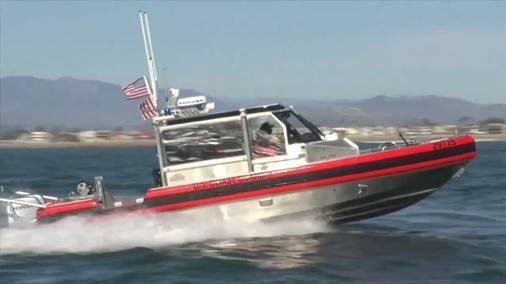
What happened next is the reason this story has the ending it has. About eighty people were evacuated from the ship before she capsized, the harbor police chief said. New Orleans firefighters reached the dock and threw ladders across to the stricken ship. And the Mississippi itself answered: vessels all around the scene raced in. Brian Clesi, captain of the riverboat Creole Queen, got a phone call at work — a ship had lost steering a quarter of a mile away. He and Ellis “Jimmy” Kimball launched their rescue boat and pulled nine people out of the water, including one man with head trauma, and ferried them to other vessels and to first responders on the bank.
Clesi said most of the people they pulled out had no life jackets on; they were, in his words, “holding on for dear life.” He also said this: “Everybody in this harbor works together as a team. If somebody is in need, everybody is coming.”
By the end of the day, the count was complete. One hundred and ninety people had been on the American Heritage. One hundred and ninety were accounted for. No one was killed. Thirty-two people were taken to hospital that day (the NTSB’s later count of those hospitalized is 36); two harbor police officers who were hospitalized were released that same evening. Louisiana’s Governor, Jeff Landry, called it a “miracle on the Mississippi.” Mayor Helena Moreno said there had to be some kind of divine, godly intervention for this outcome.
The Secretary of Homeland Security said: “By the grace of God, we have not lost one soul.” Passengers who lost everything on the ship were put up in hotels, and the city worked with the American Red Cross so people had accommodation, transport, and the prescription medicines they needed. It is worth pausing on that outcome: a five-deck riverboat, full of elderly passengers, capsized in a powerful river in twenty-two minutes — and everyone lived.
Consider the two ships themselves. The American Heritage was a sternwheel paddlewheeler, three hundred feet long, five decks, eighty-four staterooms, built for 150 guests. She was built in Salisbury, Maryland, and entered service in April 2015, sailing first as the American Eagle, then as the Queen of the Mississippi, before taking the name American Heritage in 2022 — a modern echo of the great steamboat age, built to carry Americans gently up and down the Mississippi their history was written on. The ship that struck her was almost twice her length: a 17,764-ton deadweight asphalt carrier, owned by a company registered in Liberia and managed from Singapore.
Her managers said in a statement that they deeply regretted the impact of the incident and were fully complying with the local authorities. Soon after the collision, the Port of New Orleans went to court, suing the tanker’s owner and manager, alleging negligence and more than one million dollars of damage to its terminal.
So what happens now? The NTSB recovered the tanker’s voyage data recorder on Saturday and downloaded more than nine hours of data — bridge audio, rudder angles, engine performance, speed and course. Investigators say their work is not criminal and does not assign blame; they are examining the personnel, the ships and the environment — and, unusually, they say they will also investigate the things that went right, because there were reasons nobody died, and those reasons matter. A preliminary report is expected in about thirty days; the final report could take eighteen to twenty-four months. Meanwhile, the American Heritage lies on her side in about twenty-five feet of water, resting partly on the Mississippi riverbed.
Before she can be raised, crews must remove roughly 16,000 gallons of diesel from her tanks so the Mississippi is not poisoned; officials say getting her out will take more than a month. The tanker, for her part, was towed away to Gretna. The main channel of the Mississippi, closed in the first hours, was reopened to limited traffic under a safety zone. The river went back to work. It always does.
What Happened to the Sultana on the Mississippi in 1865?
But if you know this river’s history, the images from New Orleans carried an echo: a passenger steamboat, on the Mississippi, going over with her people in the water. Because the Mississippi has seen this before. It has seen far worse. In the age of steam, the riverboats were the highways of a young nation, and their boilers were their hearts — and their curse. And in the last days of April 1865, just after the Civil War ended, one of those boats became the deadliest maritime disaster in the history of the United States. Her name was Sultana.
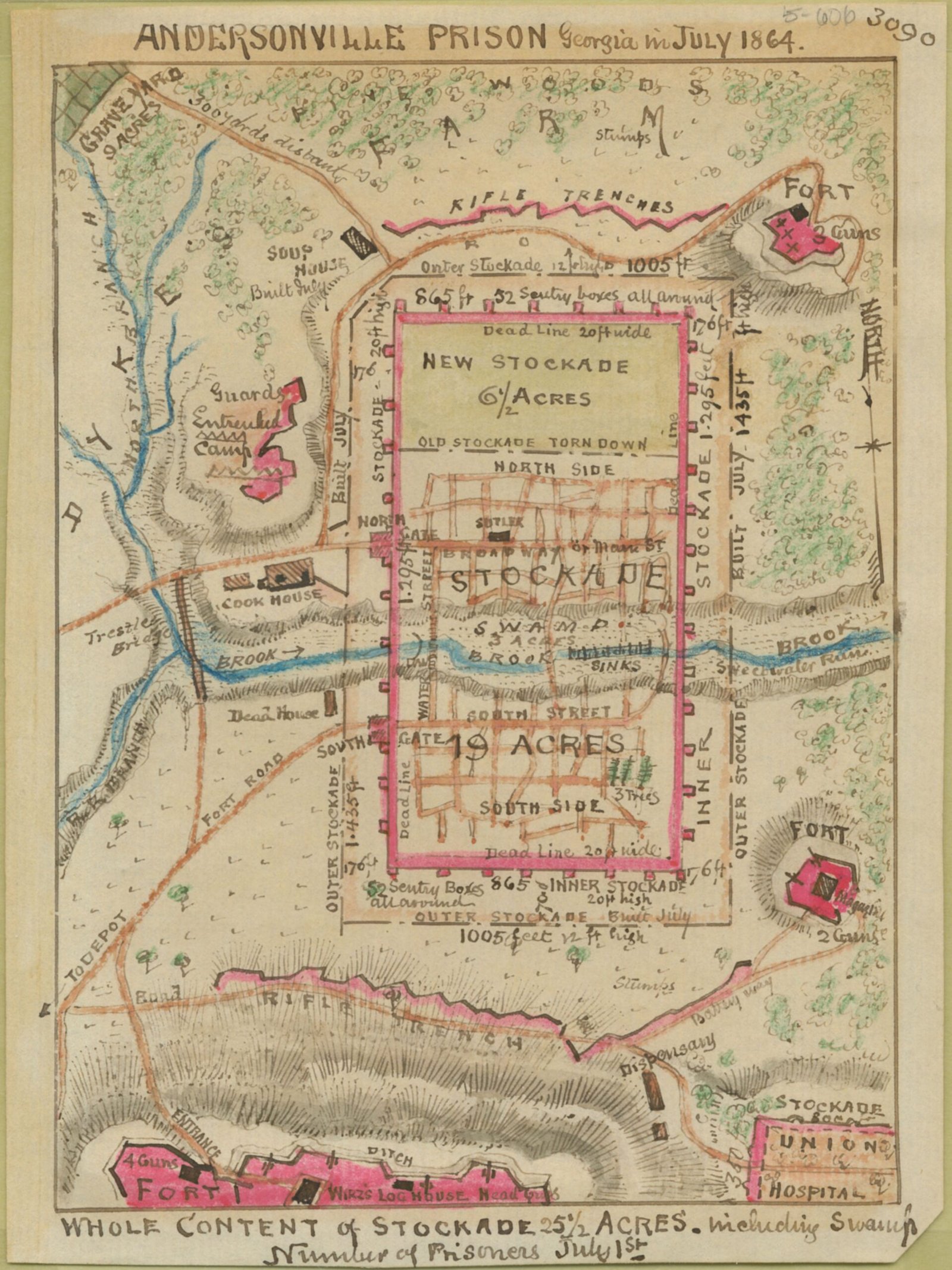
The Sultana was a wooden steamboat, 260 feet long, built in Cincinnati in 1863, running passengers and freight between St. Louis and New Orleans. On April 23rd, 1865, she docked at Vicksburg, Mississippi, with a problem: one of her boilers was leaking. At Vicksburg, the United States government contracted her to carry former Union prisoners of war north — men just released from Confederate prison camps such as Andersonville and Cahaba, men who had survived the war and captivity and were finally going home. It was a lucrative contract, and her captain, J. Cass Mason, made a decision: rather than stop for the full, time-consuming repair the boiler needed, he had it patched.
The mechanic who did the work warned them the boiler was not safe. Then an Army officer overseeing the loading, Captain George Williams, ordered the former prisoners from the parole camp and the hospital to be put aboard this one boat. The Sultana was legally allowed to carry 376 people. More than 2,000 were crowded onto her decks — more than five times her legal capacity. And on that overloaded boat, with a patched boiler, she steamed north into a river swollen and running fast with the spring thaw.
She stopped at Memphis, and just after midnight she pushed on upriver. In the early hours of April 27th, shortly after leaving Memphis, the strained boilers exploded. The blast blew apart the centre of the boat and set her on fire, and the fire could not be controlled. Men who had survived battle and prison now faced a choice between burning decks and a cold, flooded river in the dark. Hundreds died in the explosion and the fire; hundreds more drowned. Of those who survived the first horror, about two hundred later died of their burns. How many died in total, no one can say with certainty, because no reliable list of the men aboard was ever kept.
The figure recorded at the time was about 1,800; modern researchers, working through the records, put the number lower, at around 1,200 — the National Park Service cites an estimated 1,169. Either way, it stands as the deadliest maritime disaster in American history. And in the middle of it there was mercy: survivors washed up on the Arkansas shore were rescued by local residents, including former Confederate soldiers — saving Union men they might have faced in battle only weeks before.
And then, America forgot her. April 1865 was, to put it mildly, a crowded month for news. General Lee had surrendered. President Lincoln had been assassinated, and his assassin caught and killed. The Confederate president, Jefferson Davis, was captured. The Civil War itself was ending. A nation saturated with news of death put the Sultana on the back pages, and then turned the page for good. The men of the Sultana had survived the worst war in American history, and the worst prisons of that war, and died within sight of home — and their country barely looked up.
It took until 2015, the 150th anniversary, for the city of Marion, Arkansas, near where so many survivors came ashore, to open a museum in their memory, so that the story would not be lost again.
Two Days, One Mississippi River
So set the two days side by side. April 27th, 1865: a boat overloaded beyond reason, a boiler patched when it should have been rebuilt, no proper count of the souls aboard — and somewhere between 1,200 and 1,800 people gone in one night. And November 13th, 2026: a modern tanker loses its steering two minutes from disaster, a riverboat capsizes in twenty-two minutes, and every one of 190 people comes home.
The difference between those two days is not luck alone. It is life jackets and radios, black-box recorders and rescue drills, harbor police and firefighters — and a rival riverboat captain who launched his boat because, on this Mississippi, everybody comes. The investigation into the Atlantic Asphalt will take its time, and it should, because the one question that matters most — why that rudder locked — is still unanswered. But the Mississippi has already taught its lesson, twice. The Mississippi does not forgive mistakes. It only, sometimes, forgives the people who are ready for them. One hundred and sixty-one years apart, the same river gave America its worst maritime disaster — and a miracle. The difference was what happened in the twenty-two minutes.
RIVER FILE
- The collision: 13 November 2026, 12:26 p.m. local time, New Orleans; tanker Atlantic Asphalt’s rudder locked to starboard
- The riverboat: American Heritage — 300 ft sternwheeler, 140 passengers + 50 crew = 190 people
- Capsize time: about 22 minutes from impact
- Outcome: all 190 accounted for; no deaths; 32 taken to hospital that day (36 hospitalized in the NTSB’s count)
- The echo: Sultana, 27 April 1865 — more than 2,000 aboard a boat licensed for 376; boilers exploded above Memphis; about 1,200–1,800 dead — still America’s deadliest maritime disaster
- Still open: the NTSB investigation into why the Atlantic Asphalt’s steering failed (preliminary report ~30 days)
What caused the American Heritage to capsize on the Mississippi?
On 13 November 2026, the tanker Atlantic Asphalt had a steering casualty at New Orleans: her rudder stuck hard to starboard. About two minutes later, at 12:28, she struck the American Heritage at the Thalia Street wharf. The riverboat capsized in about 22 minutes. The NTSB has not yet named a cause for the steering failure.
Did anyone die when the American Heritage capsized?
No. One hundred and ninety people were on the American Heritage — 140 passengers and 50 crew — and every one of them survived. Louisiana Governor Jeff Landry called it a “miracle on the Mississippi.” The river that day was about 66 degrees Fahrenheit, cold and strong enough to kill, but rescuers reached the dock in time.
What was the Sultana disaster on the Mississippi?
In the early hours of 27 April 1865, shortly after leaving Memphis, the steamboat Sultana’s strained boilers exploded. She was legally allowed to carry 376 people but had more than 2,000 aboard, many of them former Union prisoners heading home. It is the deadliest maritime disaster in U.S. history.
How many people died on the Sultana?
The figure recorded at the time was about 1,800. Modern researchers, working through the records, put the number lower, at around 1,200; the National Park Service cites an estimated 1,169. Either way, the Sultana remains the deadliest maritime disaster in American history, on the same Mississippi that spared 190 people in 2026.
Where did the 2026 Mississippi riverboat accident happen?
It happened at New Orleans. The American Heritage was tied up at the Thalia Street wharf when the tanker Atlantic Asphalt, near the Crescent City Connection, lost steering at 12:26 p.m. on 13 November 2026 and struck her about two minutes later. The Port of New Orleans later sued, alleging more than one million dollars of damage to its terminal.
Sources and further reading
- NTSB — Collision of tank ship Atlantic Asphalt and passenger vessel American Heritage (investigation DCA27MM003)
- USA Today — NTSB says steering failure preceded New Orleans riverboat crash (15 Nov 2026)
- American Heritage (ship) — Wikipedia
- National Park Service — The Sultana disaster (Pea Ridge National Military Park program)
- American Battlefield Trust — The Sultana disaster
- The Mariners’ Museum — Tragedy on the Mississippi
More from History Not Taught
- The American Civil War: How America Tore Itself Apart
- America’s Fastest Ocean Liner Was a Secret Troopship
- The Galloping Ghost of the Java Coast: USS Houston
