
The American Civil War: How America Tore Itself Apart
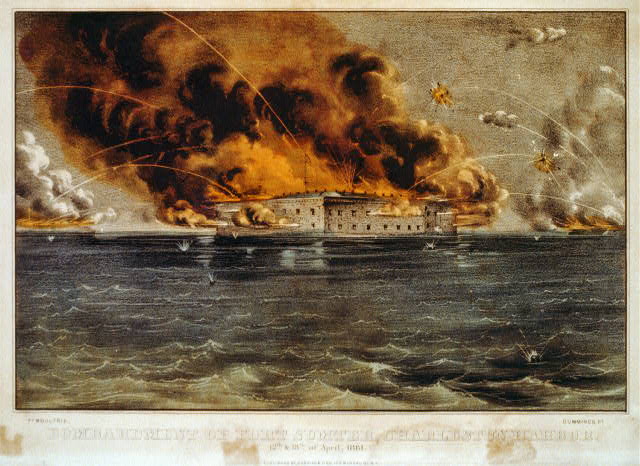
April 12th, 1861: a cannon shell bursts over Fort Sumter — the first shot of the Civil War, a war that will kill around 620,000 soldiers. But here is what is strange. That first battle in the Civil War, the deadliest war in American history killed nobody. After thirty-four hours of shelling, the fort surrendered, and not a single soldier on either side had died in the fight. (The first deaths came the next day, when an accidental explosion during the fort’s surrender salute killed two Union soldiers.) As wars go, it was a weirdly polite start. It did not stay polite.
Key Facts
- The Civil War opened on 12 April 1861, when Confederate batteries shelled Fort Sumter in Charleston Harbor, and the main fighting ended with Lee’s surrender at Appomattox on 9 April 1865.
- The Union had about 22 million people; the Confederacy about 9 million, some 3.5 million of them enslaved. Eleven states left the Union to protect slavery.
- Antietam, on 17 September 1862, was the bloodiest single day of the Civil War, with about 23,000 casualties. Gettysburg, 1–3 July 1863, was the biggest battle, with about 51,000 casualties.
- Soldiers’ deaths in the Civil War are usually given as 620,000–750,000, roughly two-thirds from disease. The war preserved the Union, ended slavery, and led to the 13th, 14th and 15th Amendments.
- Abraham Lincoln issued the Emancipation Proclamation after Antietam. He was assassinated at Ford’s Theatre after the Confederate surrender.
Table of Contents
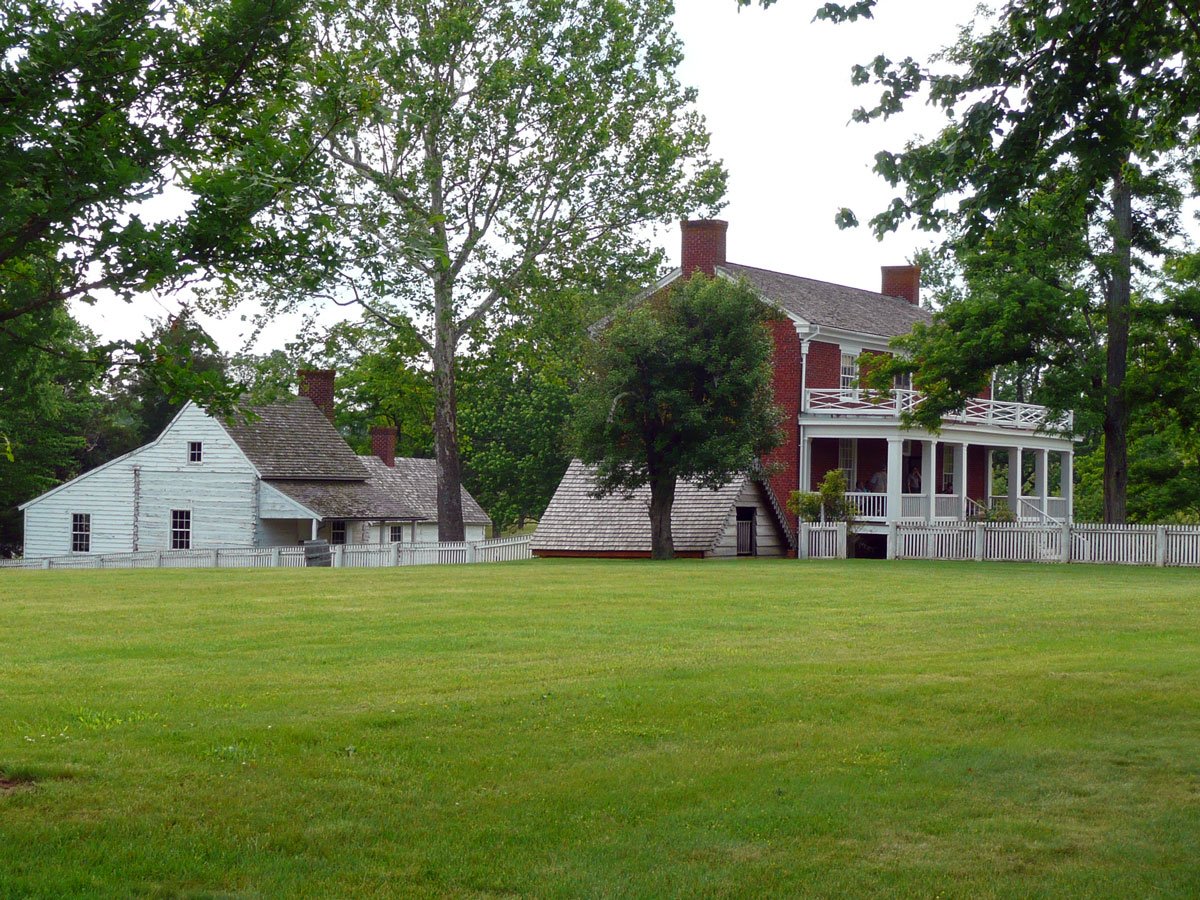
Over the next four years, brothers fought on opposite sides. A Virginia colonel named Robert E. Lee was offered a top command in the Union Army, said no, and went on to lead the other side. A new president grew a beard because an eleven-year-old girl wrote him a letter — possibly the most successful fan mail in history. And a man named Wilmer McLean watched the first big battle of the Civil War happen on his farm, moved away to get some peace and quiet — and then the Civil War ended in his living room. So how does a country not yet ninety years old tear itself in half? Why did eleven states try to leave?
And how did the North, which kept losing in Virginia for two straight years, end up winning anyway? To answer that, we have to go back to the beginning.
What Contradiction Lay at the Foundation of the Civil War?
In August 1619, a ship arrived at Point Comfort in the English colony of Virginia, carrying about twenty Africans captured in Angola and sold to the colonists — among the first enslaved Africans recorded in English North America. Over the next 150 years, slavery spread to every one of the thirteen colonies. Then, in 1776, those colonies declared that all men are created equal — a beautiful sentence, written by a man who enslaved more than 600 people over his lifetime. From its very first day, the United States had a contradiction built into its foundation.
When the founders wrote the Constitution in 1787, they did not solve that contradiction; they bargained around it. Southern states wanted enslaved people counted for seats in Congress even though they could not vote, so each enslaved person counted as three-fifths of a person. The Constitution never even uses the word “slavery” — it just quietly protects it. Many founders assumed slavery would slowly fade away. Then, in 1793, Eli Whitney built the cotton gin, a simple machine that pulled seeds from cotton many times faster than hands could. Suddenly cotton was hugely profitable — and cotton meant enslaved labor.
By 1860 the South was growing most of the world’s cotton, nearly four million people were enslaved in the United States, and enslaved people, taken together, were valued at more than all the nation’s railroads and factories combined.
Meanwhile the North went a different way: one by one the Northern states abolished slavery, and their economies filled with farms, factories, cities and immigrants. So now there was one country with two very different systems, and a constant fight over a single question: when America grows, which side does the new land join? Remember that question, because the entire Civil War grows out of it — or, as a lawyer from Illinois would later put it, a house divided against itself cannot stand.
How Did the Compromises Before the Civil War Break?
In 1819 Missouri asked to join the Union as a slave state, threatening the Senate balance of eleven free states and eleven slave states. Congress argued for a year and produced the Missouri Compromise: Missouri in as a slave state, Maine in as a free one, and a line drawn across the Louisiana Purchase at 36°30′ — north of it, no slavery; south of it, slavery allowed. Problem solved, for about twenty-five years.
Then America got a lot bigger. The Civil War with Mexico ended in 1848 with Mexico losing about half its territory — California, Nevada, Utah, most of Arizona and New Mexico, and parts of several other states — and right on cue, everyone started fighting about slavery in the new land again. When gold rushed California into seeking statehood as a free state, Congress patched things up with the Compromise of 1850: California came in free, and in return the South got a much tougher Fugitive Slave Act.
That law forced officials in free states to help capture people who had escaped slavery, and it turned out to be a huge mistake even for the people who wanted it: Northerners who had never thought much about slavery were now watching people dragged back south from Boston. Harriet Beecher Stowe was so angry she wrote a novel — Uncle Tom’s Cabin (1852), which sold 300,000 copies in the United States in its first year; for a book in the 1850s, that is basically going viral.
Meanwhile the Underground Railroad helped people flee north, some all the way to Canada; its most famous conductor, Harriet Tubman, escaped slavery herself, then went back about thirteen times and guided around seventy people to freedom. She later said she never lost a single passenger — a better record than most actual railroads.
Then, in 1854, Senator Stephen Douglas of Illinois threw out the old Missouri line with the Kansas-Nebraska Act and let settlers in Kansas and Nebraska vote on slavery themselves — “popular sovereignty.” It sounded democratic; in practice it was an invitation to a fight. Both sides rushed settlers in; pro-slavery men crossed from Missouri to vote in Kansas elections they had no right to vote in; Kansas got two rival governments, and then guns. In May 1856 a pro-slavery posse sacked the free-state town of Lawrence, and days later the abolitionist John Brown and his sons dragged five pro-slavery settlers from their cabins near Pottawatomie Creek and killed them with swords. The newspapers called it Bleeding Kansas.
That same month, Senator Charles Sumner of Massachusetts gave a furious speech against slavery, and two days later Congressman Preston Brooks of South Carolina walked into the Senate chamber and beat Sumner with a heavy cane until he lay unconscious on the floor. Sumner needed about three years to recover; Brooks was celebrated across the South, and admirers mailed him new canes. The country was now at the stage where congressmen were beating each other with sticks.
In 1857 the Supreme Court tried to settle the question once and for all, and made it so much worse: in the Dred Scott case, Chief Justice Roger Taney ruled that Black Americans could not be citizens and that Congress had no power to ban slavery in the territories at all. In the North, that ruling turned a lot of moderate people into angry ones. The next year, that lawyer from Illinois — Abraham Lincoln — ran for the Senate against Douglas in seven famous debates, warning that a house divided against itself cannot stand. Lincoln lost the race, but the country now knew his name.
And in October 1859 John Brown returned, leading about twenty men in a raid on the federal arsenal at Harpers Ferry, hoping to spark an uprising of the enslaved. It failed within two days — the Marines who captured him were commanded by an Army officer named Robert E. Lee — and Brown was hanged in December. Northerners called him a martyr; Southerners saw proof the North wanted them dead. The house was cracking.
How Did the Civil War Start at Fort Sumter?
Then came the election of 1860. The Democratic Party — the last big party with voters in both North and South — split in two, and the Republicans picked Abraham Lincoln, who was not even on the ballot in ten Southern states. He won only about 40 percent of the popular vote, but he swept the North, and the North had the Electoral College votes. Lincoln had promised not to touch slavery where it already existed; he only wanted to stop it spreading west. For many Southern leaders that was enough: if slavery could not grow, they believed, it would eventually die — and their whole economy and way of life with it.
Six weeks after the election, on December 20th, 1860, South Carolina voted to leave the Union. Within six weeks Mississippi, Florida, Alabama, Georgia, Louisiana and Texas followed, and in February 1861 they formed the Confederate States of America at Montgomery, Alabama, with Jefferson Davis as president. They were not shy about why: in March, Confederate Vice President Alexander Stephens declared in Savannah that his new government’s cornerstone rested on “the great truth that the Negro is not equal to the white man” and that slavery was his natural condition. That is not a historian’s interpretation; that is the Confederate vice president in his own words.
Lincoln was sworn in on March 4th, 1861, with the federal government having lost nearly all its forts in the seceded states. One of the few still holding out was Fort Sumter, in Charleston Harbor, running out of food. Lincoln announced he was sending supplies — food only, no soldiers or weapons — putting the decision on the Confederates. On April 12th, they opened fire. Thirty-four hours later the fort surrendered. Three days after that, Lincoln called for 75,000 volunteers — and that call pushed four more states over the edge: Virginia, Arkansas, North Carolina and Tennessee. Eleven states were now gone, and the Confederacy moved its capital to Richmond, Virginia — about a hundred miles from Washington.
The two capitals were basically neighbors, and the land between them was about to become the most fought-over ground in American history.
The Math, the Picnic, and the Ironclads
If you had to bet on this war in 1861, you would probably bet on the North. The Union had about 22 million people; the Confederacy about 9 million, around 3.5 million of them enslaved. The North had most of the factories, some 22,000 miles of railroad to the South’s 9,000, and a real navy. But the South did not need to conquer anybody — it just needed to survive until the North got tired, fighting at home on ground it knew, with many of the old army’s best officers, men like Lee.
Four slave states — Delaware, Maryland, Kentucky and Missouri — stayed in the Union, and Lincoln was desperate to keep them, especially Kentucky; he supposedly joked that he hoped to have God on his side, but he had to have Kentucky. (It is a great line, and only secondhand — don’t put it on a mug.)
The old general in charge, Winfield Scott, proposed a slow plan: blockade the Southern coast, control the Mississippi River, and squeeze. The newspapers mocked it as the Anaconda Plan; everybody wanted something faster — “On to Richmond!” So in July 1861 a Union army of about 35,000 mostly untrained men marched toward a railroad junction at Manassas, near a creek called Bull Run — and Washingtonians came out to watch, some with picnic baskets. The battle started well for the Union; then Confederate reinforcements arrived by train, and a brigade under Thomas Jackson refused to budge — “standing there like a stone wall,” another general reportedly shouted, and the name Stonewall Jackson stuck.
By afternoon the Union army broke and ran back to Washington, tangled up with the picnic crowd in a total traffic jam. About 5,000 men were killed, wounded or captured between the two armies. So much for the picnic — both sides finally understood this would not be a short Civil War. And remember Wilmer McLean? The battle was fought across his farm; a Confederate general used his house as headquarters, and a Union cannonball reportedly crashed into his kitchen fireplace. So McLean moved somewhere quiet: a little village in southern Virginia called Appomattox Court House. Hold that thought.
While the East was stuck, the Civil War in the West made the name of a man almost nobody had heard of. Ulysses S. Grant had left the army years earlier and was working in his family’s leather-goods store in Galena, Illinois — not exactly a war-hero origin story. In February 1862 he took Fort Henry and then Fort Donelson, replying to the Confederate commander’s request for terms that “no terms except an unconditional and immediate surrender” could be accepted; more than 12,000 Confederates surrendered, and newspapers decided U.S. Grant stood for “Unconditional Surrender” Grant.
At sea that March, the Confederates raised the sunken Union warship Merrimack, plated her in iron, and sent her out as CSS Virginia to wreck two wooden Union warships in Hampton Roads, cannonballs bouncing off her — and the next morning a strange Union ship appeared, USS Monitor, “a cheese box on a raft,” with a single rotating turret, built in about a hundred days. The two ironclads pounded each other for hours; neither could sink the other, but every navy in the world was watching, and wooden warships suddenly looked like museum pieces. Then, on April 6th, 1862, Confederate General Albert Sidney Johnston surprised Grant’s army near a little log church called Shiloh.
Johnston himself was shot and bled to death — the highest-ranking officer on either side killed in the whole Civil War — and on the second day Union reinforcements drove the Confederates back. In two days at Shiloh there were about 23,000 casualties: more than American forces suffered in the Revolutionary War, the War of 1812 and the Mexican War combined. And it was only April of the second year. Later that month, a Union fleet under David Farragut ran past the forts below New Orleans and captured the largest city in the Confederacy. The Anaconda was starting to squeeze.
Antietam, Emancipation, Gettysburg
In the East, the Union commander was now George McClellan — brilliant at organizing an army, beloved by his soldiers, and extremely cautious, almost always believing the enemy had far more men than it really did. (Lincoln reportedly said that if McClellan wasn’t using the army, he would like to borrow it for a while.) In the spring of 1862 McClellan crept up the Peninsula until his men could hear Richmond’s church bells; then, on June 1st, the Confederate army got a new commander — Robert E. Lee — who attacked almost immediately, and kept attacking for a week in the Seven Days Battles. McClellan pulled back; Richmond was saved.
Lee turned north and won again at Second Bull Run, on almost the same ground as the first.
So in September 1862 Lee invaded the North — and then came one of the luckiest moments of the entire Civil War. On September 13th, two Union soldiers resting in a field found a piece of paper wrapped around three cigars: a copy of Lee’s battle orders, Special Order 191, showing his army split into pieces. McClellan had the enemy’s plan in his hands — and still moved slowly. On September 17th the armies met along Antietam Creek near Sharpsburg, Maryland, fighting through a cornfield, a sunken farm road the soldiers called Bloody Lane, and across a stone bridge. By sunset there were about 23,000 casualties: still the bloodiest single day in American military history.
Lee pulled back into Virginia; McClellan let him go. A few weeks later, Alexander Gardner’s photographs of the Antietam dead went on display in New York — the first time ordinary Americans saw a battlefield’s dead — and the New York Times wrote that Brady’s studio had done something very like laying bodies in the people’s dooryards and along their streets.
Antietam also gave Lincoln the victory he had been waiting for — because he had a piece of paper of his own. For the first year and a half Lincoln had said the Civil War was about one thing: saving the Union. But enslaved people were not waiting for permission: thousands escaped to Union lines, and the Civil War on the ground was already turning into a war about slavery. In the summer of 1862 Lincoln had drafted an Emancipation Proclamation, but Secretary of State William Seward warned that announcing it after a string of defeats would look like a desperate cry for help — so Lincoln put it in a drawer and waited for a win. Antietam was close enough.
On September 22nd, 1862, he announced that on January 1st, 1863, all people held as slaves in states still in rebellion would be free. And on New Year’s Day, he signed it. The tricky part: it applied only to areas in rebellion, where the Union had no control — it did not free people in the loyal border states, so on day one it freed relatively few in practice. But it changed what the Union army was: from then on, every mile the army advanced was a mile of freedom. It made it very hard for Britain and France, which had already banned slavery, to openly support the Confederacy.
And it opened the army to Black soldiers: by the Civil War’s end around 180,000 Black men had served in the Union Army, about one in ten Union soldiers. In July 1863 the 54th Massachusetts, one of the first Black regiments raised in the North, led a desperate attack on Fort Wagner outside Charleston and lost almost half the men who went in; nobody could say anymore that Black soldiers would not fight.
And Harriet Tubman, during the Civil War, worked for the Union Army as a scout and spy — in June 1863 she helped guide a raid up the Combahee River in South Carolina in which more than 700 enslaved people escaped to Union gunboats, making her one of the first women in American history to help lead an armed military raid.
But in Virginia things still looked terrible for the Union. At Fredericksburg that December, Union troops charged up a slope at Confederates behind a stone wall, wave after wave, and were cut down. Then, in May 1863 at Chancellorsville, Lee pulled off what many consider his greatest victory, against an army more than twice his size — at a huge price: Stonewall Jackson was accidentally shot by his own men in the dark, and died eight days later. Lee said he had lost his right arm. Feeling confident, Lee invaded the North again, this time Pennsylvania — and on July 1st, 1863, the two armies collided almost by accident at a small crossroads town where ten roads met: Gettysburg.
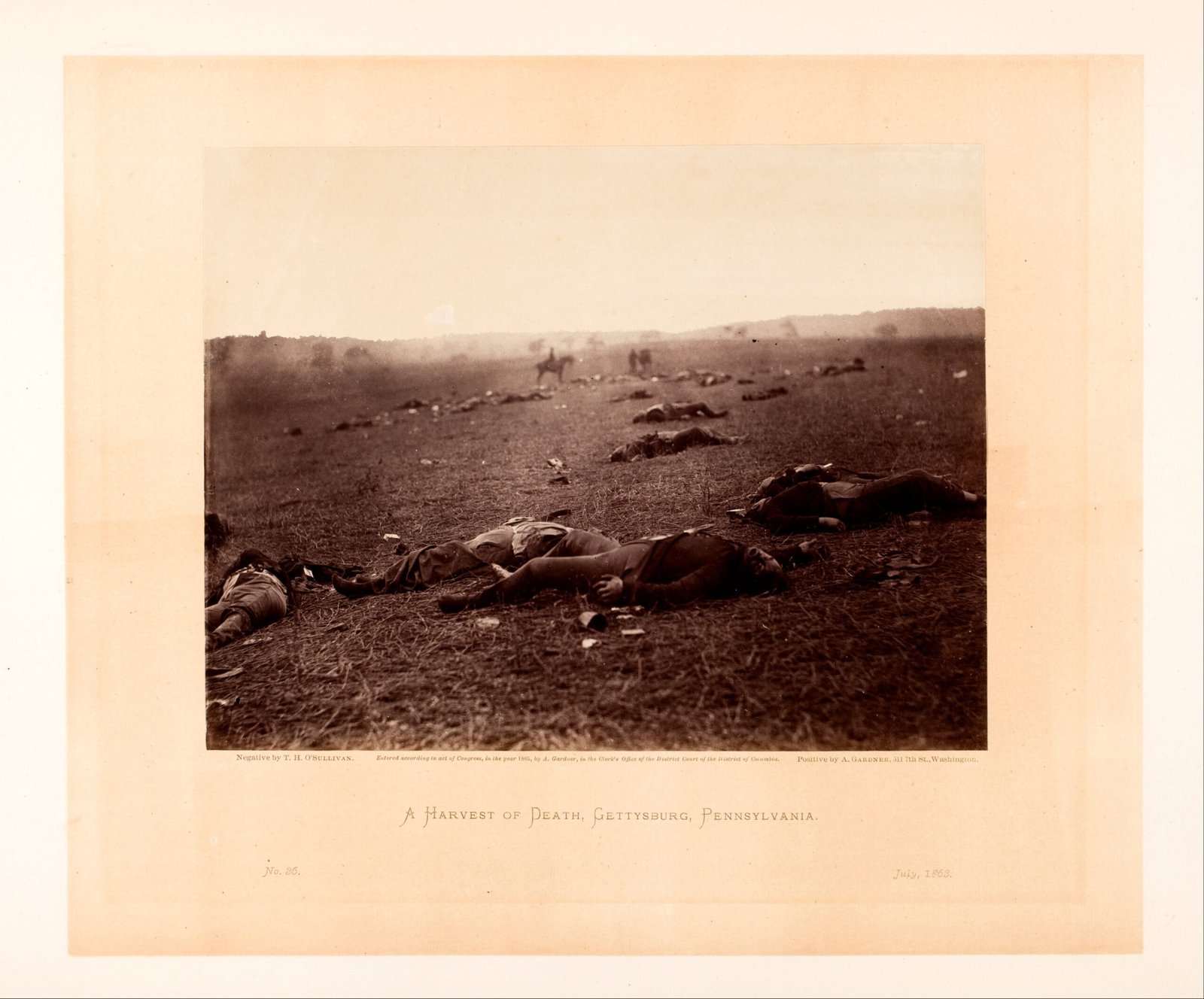
On the second day, a Maine regiment under a former college professor, Joshua Chamberlain, held a hill called Little Round Top and, running low on ammunition, charged downhill with bayonets. On the third day, Lee gambled everything on one attack straight at the Union center: about 12,000 men marched across almost a mile of open fields under artillery fire the whole way. Pickett’s Charge failed; within about an hour, more than half the attackers were killed, wounded or captured. Across three days at Gettysburg the two armies suffered around 51,000 casualties — the biggest battle ever fought in North America. Lee retreated to Virginia and never seriously invaded the North again.
And the very next day, July 4th, after a siege of forty-seven days in which people ate mules and families lived in caves dug into the hillsides, Vicksburg, Mississippi, surrendered to Grant. With Vicksburg gone, the Union controlled the entire Mississippi River; the Confederacy was cut in two, and the Anaconda had closed its grip.
Not everyone in the North was cheering: that same month, the first federal draft lottery sparked riots in New York City. Rich men could pay $300 to avoid service, and many working men felt the Civil War was being fought on their backs; rioters attacked Black New Yorkers and burned an orphanage for Black children, and more than a hundred people died. In November, Lincoln came to Gettysburg to help dedicate a cemetery for the Union dead.
The main speaker, Edward Everett, spoke for about two hours; then Lincoln stood up and spoke for about two minutes — around 270 words — calling for “a new birth of freedom” and a government “of the people, by the people, for the people.” Everett later wrote to him that he wished he had come as close to the point in two hours as Lincoln did in two minutes.
Grant, Sherman, and the Long Squeeze
By early 1864 Lincoln had finally found his general. He brought Grant east and put him in command of all the Union armies. Grant’s plan was simple and brutal: attack everywhere at once, never let Lee rest. In May, Grant marched into a dense Virginia forest known as the Wilderness, where the fighting was so close and chaotic that the woods caught fire and wounded men burned. Every Union general before Grant had retreated after a battle like that. Grant didn’t — he turned south and kept going: Spotsylvania, North Anna, Cold Harbor, six weeks of fighting almost every single day.
At Cold Harbor, thousands of Union soldiers were cut down in a single morning; some had pinned their names to their coats so their bodies could be identified. Northern newspapers started calling Grant a butcher. But Grant knew something: the North could replace its losses, and the South could not. In June he swung to Petersburg, the railroad hub feeding Richmond, and settled into a siege of trenches that would last about nine and a half months — if that sounds like the First World War fifty years early, you are not wrong. There was even a preview of another new weapon: in February 1864, the Confederate submarine H. L.
Hunley rammed a torpedo into the Union warship Housatonic outside Charleston and sank her — the first time in history a submarine sank an enemy warship. Then the Hunley sank too, with her whole crew.
Meanwhile the Civil War was becoming very unpopular in the North, and 1864 was an election year. The Democrats nominated George McClellan — yes, the same McClellan — on a platform calling for peace, and that summer Lincoln honestly expected to lose. Then General William Tecumseh Sherman captured Atlanta on September 2nd, and suddenly the Civil War looked winnable again. In November, Lincoln won re-election easily; soldiers in the army voted for him in big numbers, which tells you something.
After Atlanta, Sherman cut loose from his supply lines and marched about 300 miles across Georgia to the sea, his army living off the land and destroying railroads, crops and anything useful to the Confederate war effort along a path dozens of miles wide, while thousands of enslaved people followed the army to freedom. On December 22nd he telegraphed Lincoln, presenting him the city of Savannah “as a Christmas gift.”
Appomattox, Ford’s Theatre, and the Bill
By the start of 1865 the Confederacy was falling apart: its money nearly worthless, its soldiers deserting in growing numbers, Sherman marching north through the Carolinas. In Washington, Lincoln pushed for something bigger than the proclamation: on January 31st, the House of Representatives passed the 13th Amendment, abolishing slavery everywhere in the United States, and the galleries erupted in cheers. On April 2nd, Grant finally broke through at Petersburg; Lee’s army abandoned Richmond that night, and two days later Lincoln walked through the streets of the Confederate capital as formerly enslaved people crowded around him. Lee tried to escape west, but his men were starving and Union cavalry got ahead of him.
On April 9th, 1865, Lee asked to meet Grant — and they needed a house to do it in. An aide found one in the little village of Appomattox Court House. It belonged to Wilmer McLean — the same Wilmer McLean whose farm had stood in the middle of the first battle at Bull Run. He had moved 120 miles to get away from the Civil War, and the Civil War followed him into his living room. Lee arrived in a crisp full-dress uniform; Grant showed up in a muddy private’s coat. Grant’s terms were generous: Lee’s men could go home, keep their horses for spring planting, and officers could keep their sidearms — and Grant sent food to Lee’s starving army.
When Union soldiers began firing celebration salutes, Grant ordered them to stop: “The rebels,” he said, “were our countrymen again.”
Five days later, on April 14th, Lincoln went to see a comedy at Ford’s Theatre in Washington. During the play, an actor and Confederate sympathizer named John Wilkes Booth slipped into the president’s box and shot him in the back of the head, then jumped to the stage and escaped, shouting something in Latin. Lincoln died the next morning — the first American president to be assassinated. Booth was tracked down and killed twelve days later in a Virginia tobacco barn. The remaining Confederate armies surrendered over the following weeks. On June 19th, 1865, Union troops arrived in Galveston, Texas, and announced that all enslaved people there were free — today a national holiday, Juneteenth.
And in December, the 13th Amendment was ratified. Slavery in the United States was over.
So what did it all cost? For a long time the number everyone used was about 620,000 soldiers dead; in 2011, the historian J. David Hacker used census data to estimate the real figure was closer to 750,000. Either way, it is roughly as many Americans as died in all the country’s other wars put together — and about two out of every three of those deaths came from disease, not bullets. There is one more place that shows how bitter it all was: during the Civil War, the Union Army took over Robert E. Lee’s family estate across the river from Washington and began burying its dead there, partly to make sure Lee could never live there again.
Today it is called Arlington National Cemetery.
Nearly four million people were freed, and what came next was called Reconstruction. Three new amendments rewrote the Constitution: the 13th ended slavery; the 14th made everyone born in the United States a citizen with equal protection of the laws; the 15th said the right to vote could not be denied because of race. A new federal agency, the Freedmen’s Bureau, set up schools for people who had been forbidden to learn to read, and thousands of formerly enslaved adults sat down in classrooms next to children. For a few years, Black Americans voted in huge numbers, and some were elected to Congress — in 1870, Hiram Revels of Mississippi became the first Black United States senator.
He represented Mississippi — the same state that had sent Jefferson Davis to the Senate before the Civil War. History does have a sense of humor sometimes. But it didn’t last: Reconstruction ended in 1877, federal troops left the South, and many of those rights were stripped away for nearly a century, until the civil rights movement fought to win them back. The house was put back together. Fixing what was inside it took a lot longer.
A country was founded with slavery built into its foundation. Every time it grew, it fought over which side the new land would join. The compromises kept breaking until an election finally broke the country. Eleven states left to protect slavery. The North had more people, more factories and more railroads — but it took four years, two great generals and hundreds of thousands of lives to win. And by the end, a Civil War that started as a fight to save the Union had become a war that ended slavery. A house divided against itself cannot stand. In 1865, it finally stopped being divided.
WAR FILE
- Dates: 12 April 1861 (Fort Sumter) – 9 April 1865 (Appomattox), with surrenders following into June
- The sides: Union — about 22 million people; Confederacy — about 9 million, some 3.5 million of them enslaved
- Bloodiest day: Antietam, 17 September 1862 — about 23,000 casualties
- Biggest battle: Gettysburg, 1–3 July 1863 — about 51,000 casualties
- The cost: 620,000–750,000 soldiers dead, roughly two-thirds from disease
- The result: The Union preserved; nearly 4 million people freed; the 13th, 14th and 15th Amendments
When did the Civil War start and end?
The Civil War began on 12 April 1861, when Confederate batteries opened fire on Fort Sumter in Charleston Harbor. Robert E. Lee surrendered the Army of Northern Virginia at Appomattox on 9 April 1865, with other Confederate surrenders following into June. The fighting lasted four years.
How many people died in the Civil War?
The usual range for Civil War soldiers’ deaths is 620,000 to 750,000. Roughly two-thirds died of disease rather than battle. Antietam, on 17 September 1862, was the bloodiest single day, with about 23,000 casualties; Gettysburg, 1–3 July 1863, was the largest battle, with about 51,000.
What caused the Civil War?
The Civil War grew out of a country founded with slavery in its structure, and out of a long fight over whether new land would be free or slave. Compromises kept failing until the 1860 election. Eleven states then seceded to protect slavery, and the first shots were fired at Fort Sumter.
What was the bloodiest battle of the Civil War?
Gettysburg, fought from 1 to 3 July 1863, was the biggest battle of the Civil War, with about 51,000 casualties. The bloodiest single day was Antietam, on 17 September 1862, with about 23,000 casualties. Those figures count killed, wounded, captured and missing, not deaths alone.
How did the Civil War end slavery?
A Civil War that began as a fight to save the Union became a war that ended slavery. After Antietam, Lincoln issued the Emancipation Proclamation. Union victory, and then the 13th, 14th and 15th Amendments, abolished slavery and wrote new civil and voting rights into the Constitution.
Sources and further reading
- National Park Service — The Civil War: overview
- National Park Service — The Battle of Shiloh
- National Park Service — Hiram Rhodes Revels, first African American in Congress
- National Archives — The Emancipation Proclamation
- American Battlefield Trust
More from History Not Taught
- Capsized in 22 Minutes — The Miracle on the Mississippi
- Can States End the Electoral College Without an Amendment?
- How Britain Ruled the World
