
Can Democrats End the Electoral College Without Changing the Constitution? The Compact Explained
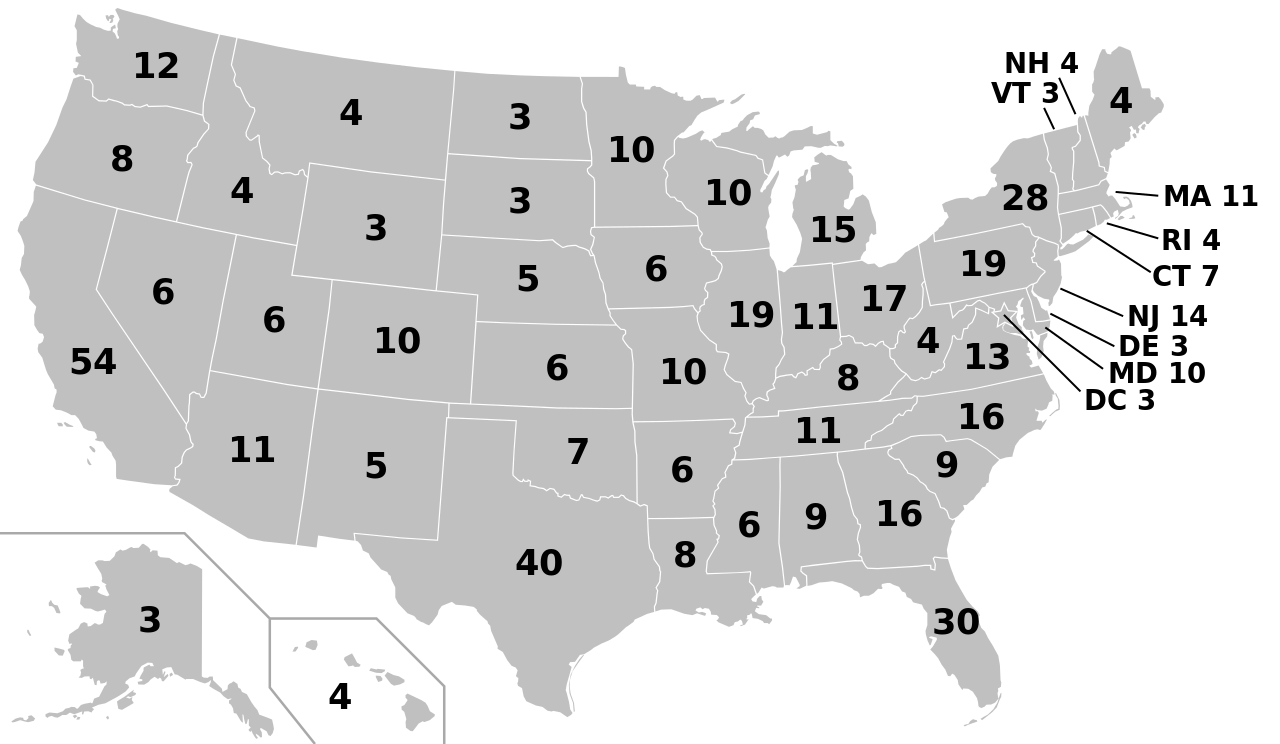
They may not need a constitutional amendment. Right now, a pact between states is 48 electoral votes away from ending the Electoral College as we know it. Look at the Electoral College map: California, New York, Illinois, Virginia — eighteen states plus Washington, DC, have already signed it. Together they hold 222 electoral votes. The magic number is 270.
Key Facts
- Eighteen states plus Washington, DC, have signed the National Popular Vote Interstate Compact, worth 222 electoral votes. The compact takes effect only at 270, a majority of the Electoral College.
- The pact is 48 electoral votes short of changing how the Electoral College currently works. Winner-take-all is not in the Constitution; today only Maine and Nebraska split their votes.
- Article II leaves each state legislature free to decide how electors are appointed. Once the 270-vote threshold is met, member states would award their electors to the national popular-vote winner.
- In April 2026, Virginia became the eighteenth state to sign. After the 3 November 2026 midterms, Democrats won trifectas in Arizona (11), Michigan (15), Nevada (6), Pennsylvania (19) and Wisconsin (10). If all five join, the total would jump from 222 to 283.
- Wrong-winner Electoral College elections include 2000, when Al Gore won the popular vote by more than half a million, and 2016, when Hillary Clinton won it by almost 3 million. In 2024 Donald Trump won both the Electoral College and the popular vote.
Table of Contents
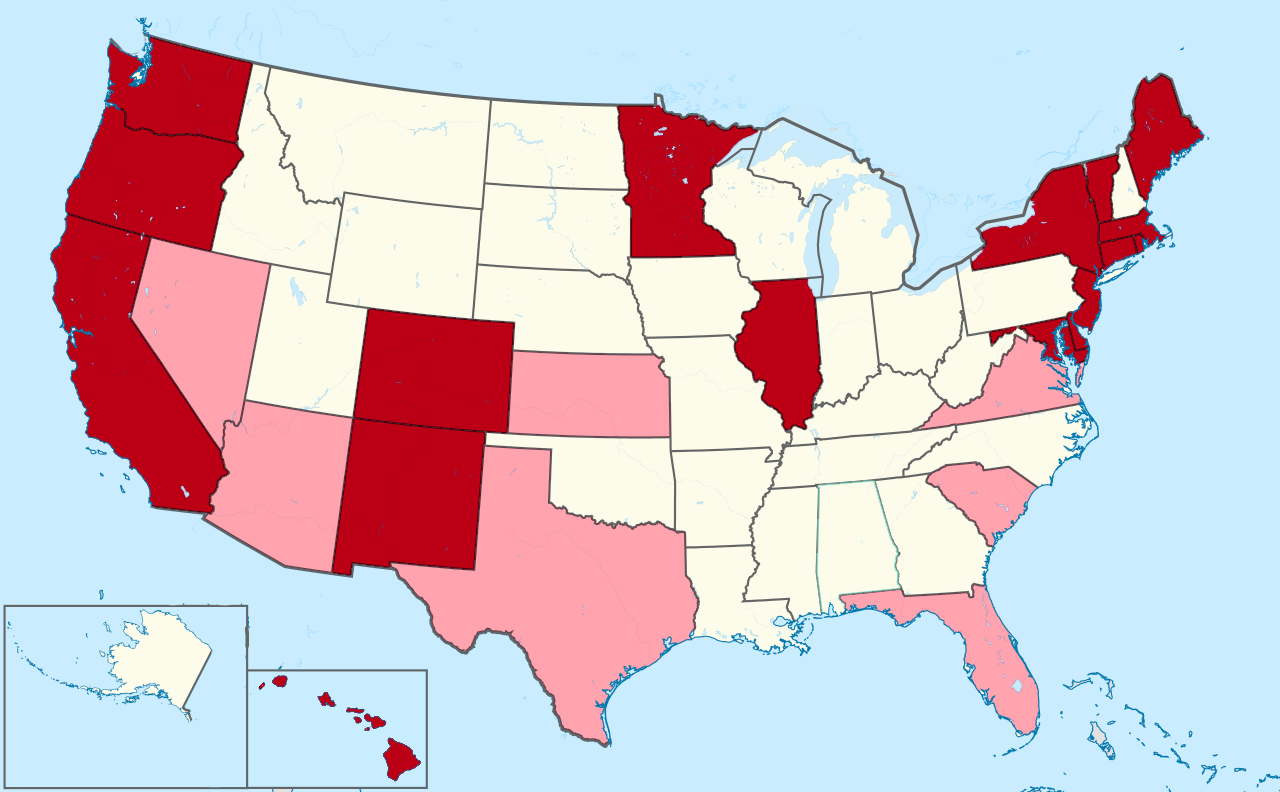
And on November 3rd, 2026, something changed. Democrats won full control of the governor’s office and both chambers of the legislature in five swing states — Arizona, Michigan, Nevada, Pennsylvania and Wisconsin. Add them up and that is 61 more electoral votes: enough to cross the line.
Here is what is strange. The Electoral College has survived for more than 230 years. Hundreds of amendments have been proposed to change it or abolish it. None of them made it. And now the biggest threat to the Electoral College might not come from Congress at all. It might come from a handful of state capitals.
What Does Article II Say About the Electoral College?
Here is the thing most people miss: the Constitution never says a state has to give its electoral votes to whoever wins that state. Article II says each state shall appoint its electors “in such manner as the legislature thereof may direct.” That is it. Winner-take-all is not in the Constitution — it is just a choice almost every state made in the early 1800s. Today, only Maine and Nebraska split their votes.
So here is the idea. A state passes a law saying: we will give all our electoral votes to the candidate who wins the most votes in the whole country — not in our state, in the whole country. But there is a catch, and it is the clever part. The law only switches on when enough states have signed the same law to reach 270 electoral votes, a majority of the Electoral College. Once that happens, the math is simple: whoever wins the national popular vote automatically gets at least 270 electoral votes, and the person with the most votes becomes president every time.
The Electoral College would still exist on paper — electors would still meet in December — but the result would be decided by the national vote count. It is called the National Popular Vote Interstate Compact.
Why the Founders Built the Electoral College
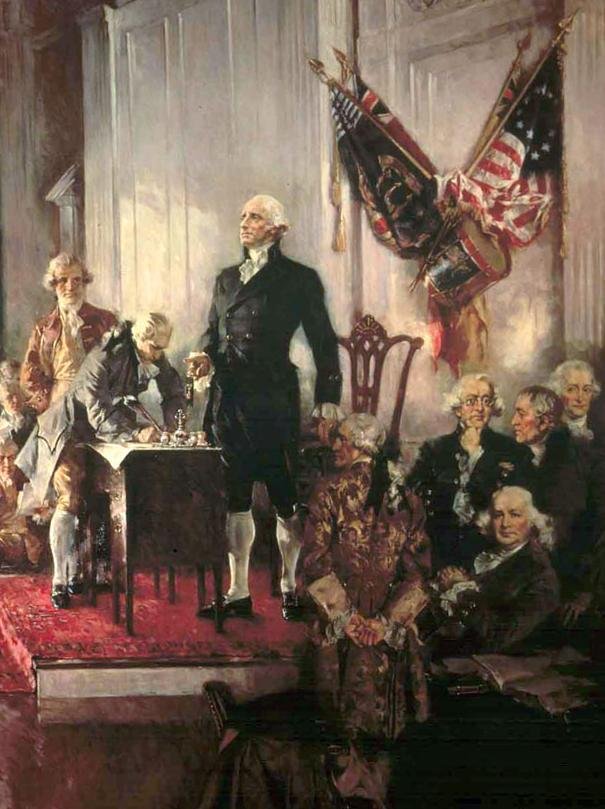
Philadelphia, the summer of 1787: fifty-five delegates locked inside a hot room, writing a new constitution, facing a simple question — who picks the president? Some wanted Congress to choose; others worried that would make the president a puppet of Congress. James Wilson of Pennsylvania proposed something radical for the time: let the people vote directly. The idea was voted down. There were practical worries — the country was huge, news traveled by horse, and most voters would never see the candidates — and some delegates feared the public could be fooled by a smooth-talking demagogue.
But there was another reason, and historians point to it often. James Madison said that in principle a popular vote was the fittest method — but he warned the southern states would have no influence in it, because enslaved people could not vote. Under the three-fifths compromise, enslaved people were partly counted toward a state’s seats in Congress, and an electoral system based on those seats kept that advantage. Small states had their own worry: they did not want the big states to run everything. So each state got electors equal to its House seats plus its two senators, which gives small states a small boost.
In September 1787 a committee proposed the final plan: electors chosen however each state wanted, meeting in their own states — and if nobody won a majority, the House would decide. It was a compromise built from many compromises, and it broke almost immediately.
The System Breaks: 1800, 1824, and the Wrong-Winner Elections
In the original system, each elector cast two votes for president; first place became president, second place vice president. In 1800, Thomas Jefferson’s party planned for Jefferson as president and Aaron Burr as vice president — but every one of their electors voted for both men. Jefferson and Burr tied at 73 votes each, the election went to the House, and it took 36 ballots and almost a week before Jefferson finally won. Everyone agreed that was a mess, so in 1804 the country ratified the 12th Amendment: one vote for president, a separate vote for vice president. That is still the Electoral College system used today.
But the 12th Amendment kept one rule — if no one gets a majority, the House picks the president. Twenty years later, it did.
The election of 1824 had four major candidates. Andrew Jackson won the most popular votes, about 41 percent, and the most electoral votes, 99 — but not a majority. The House decided, with each state delegation casting one vote. Henry Clay, who had finished fourth, threw his support to John Quincy Adams. Adams won — then made Clay his Secretary of State. Jackson’s supporters called it a “corrupt bargain,” and Jackson used the anger to win a landslide four years later. It is the only time the House has picked a president under the 12th Amendment, and the first time the candidate with the most votes did not win.
Since then it has happened four more times, in a cleaner way — a candidate won the Electoral College while losing the national popular vote. In 1876, Samuel Tilden won the popular vote with a majority, but 20 electoral votes from four states were disputed; a special commission voted 8–7 along party lines, Rutherford B. Hayes won by a single electoral vote, 185 to 184, and in the deal that followed, federal troops left the South and Reconstruction ended. In 1888, Grover Cleveland won the popular vote by about 90,000 votes and Benjamin Harrison won the Electoral College — four years later, Cleveland came back and beat Harrison.
In 2000, Al Gore won the popular vote by more than half a million, but everything came down to Florida, where George W. Bush led by just 537 votes; after 36 days and a Supreme Court decision, Bush won the Electoral College 271 to 266. In 2016, Hillary Clinton won the popular vote by almost 3 million, and Donald Trump won the Electoral College 304 to 227.
Notice something? Most of those modern cases helped Republicans — a big reason Democrats are pushing the compact against the Electoral College today. But it does not always work that way. In 2004, George W. Bush won the popular vote by about 3 million — yet if around 60,000 voters in Ohio had switched sides, John Kerry would have won the presidency while losing the popular vote. And in 2024, Donald Trump won both the Electoral College and the popular vote. The system can bite either party.
Why Did an Electoral College Amendment Almost Happen?
So if most Americans want change, why not just amend the Constitution? Because amending it is brutally hard: two-thirds of the House, two-thirds of the Senate, then 38 of the 50 states — and thirteen states are enough to block any amendment. It almost happened once. In 1969, after a very close three-way race, the House voted 339 to 70 to replace the Electoral College with a direct popular vote, and President Richard Nixon backed it. In 1970 it died in the Senate, blocked by a filibuster led largely by senators from small and southern states. That was the closest America has ever come.
Today the idea is popular — a 2024 Pew Research Center survey found 63 percent of Americans would rather have the popular-vote winner become president — but support splits sharply by party: about eight in ten Democrats want the change, while Republicans are divided and a majority of them want to keep the Electoral College. For now, an amendment is close to impossible. Which is why someone came up with a workaround.
The Lottery Inventor and the Compact
In 2001, a year after Bush v. Gore, Yale law professor Akhil Amar and his brother Vikram Amar published a thought experiment: what if states simply agreed among themselves to give their electors to the national winner? Akhil Amar later said he never thought anyone would actually do anything with it. Then a man named John Koza did. Koza was a computer scientist who had helped invent the scratch-off lottery ticket. In 2006 he launched National Popular Vote, a group that has lobbied state legislatures ever since. Maryland became the first state to sign in 2007, then New Jersey, Illinois and Hawaii. California and New York joined. Colorado joined, and in 2020 Colorado voters kept it in a statewide referendum.
Minnesota and Maine joined. And in April 2026, Virginia became the eighteenth state. That is 222 electoral votes. According to Ballotpedia, sixteen of those eighteen states were under full Democratic control when they joined — though Republicans have not been completely absent: the Republican-controlled Oklahoma Senate once passed it, but it went no further.
For years the compact against the Electoral College seemed stuck. It had all the big blue states it could get; the rest were swing states and red states with no reason to give up their power. Then came November 3rd, 2026. The midterms gave Democrats new trifectas — the governor and both chambers — in five states that have not joined: Arizona with 11 electoral votes, Michigan with 15, Nevada with 6, Pennsylvania with 19 and Wisconsin with 10. If all five join, the compact on the Electoral College jumps from 222 to 283 — thirteen more than it needs. And you do not even need all five: Michigan plus Pennsylvania plus any two of the other three would push it over 270.
Without Michigan or without Pennsylvania, it falls short.
Lawmakers in all five states have introduced these bills before, and now they say they want to move early. In Wisconsin, State Senator Kelda Roys told the New York Times that national popular vote will be something they prioritize early in the session. In Arizona, incoming Senate President Priya Sundareshan said her caucus is prepared to join. Pennsylvania Governor Josh Shapiro said he would work with lawmakers to figure out the right path. Michigan may be the toughest: Democrats there held full control in 2023 and 2024 and did not pass it, and incoming Senate Majority Leader Darren Camilleri told Politico that Michigan could be one of the tipping-point states and he wants everybody on the same page first.
Nevada has history, too: in 2019 its lawmakers passed the compact on the Electoral College and the Democratic governor at the time, Steve Sisolak, vetoed it, saying it could diminish the role of smaller states like Nevada. And there is a deadline: under the compact’s own rules on the Electoral College, it only governs an election if it is in effect by July 20th of that year. For 2028, the clock is already running.
The Case For — and the “Doomsday Machine”
Supporters make three arguments. First, the simple one: one person, one vote. In elections for governor, senator or mayor, the candidate with the most votes wins — why should the most powerful office in the country be different? Second, they say the current system makes most Americans spectators: in the 2024 general-election campaign, according to a FairVote tracker, 94 percent of presidential campaign events were held in just seven swing states; thirty-two states did not get a single visit. Third, they argue a vote in Wyoming counts for more than a vote in California — Wyoming has roughly one elector for every 190,000 people, California about one for every 730,000.
And supporters insist this is not a partisan idea: Patrick Rosenstiel, a Republican strategist who advises the National Popular Vote campaign, told the Associated Press he does not believe he has ever been relevant in a presidential election, and that a national vote would force campaigns to chase every voter in every precinct. To supporters, this is a fairness fix, not a power grab.
The critics have serious arguments too. First, the Constitution itself: Article I says no state shall enter into any agreement or compact with another state without the consent of Congress. Critics say a compact that decides who becomes president is exactly the kind of deal that needs congressional approval; Notre Dame law professor Derek Muller argues it would need Congress and could even face a presidential veto. Supporters answer that the Supreme Court has said only some compacts need consent, and that states already have full power over their electors. Either way, as the Washington Post reports, it would face an avalanche of litigation.
Second, small states and rural America: critics say that with a pure national vote, campaigns would pour their time into big cities and big states, and places like Nevada, New Hampshire or rural Pennsylvania would lose their voice; conservative legal scholar Hans von Spakovsky told Fox News he thinks the Supreme Court would strike down any compact that changes such a basic piece of the Constitution.
Third — and this is the scariest one — recounts. Today, if an election is close, the fight is in one state, like Florida in 2000. Under the compact, unlike a national Electoral College recount, there is no national election office: every member state would add up the vote totals from all fifty states on its own. So what happens if the national margin is just a few thousand votes? Who orders a recount in a state that never joined the compact to bypass the Electoral College and does not want to pay for one? That is the worry of Akhil Amar — the same Yale professor who floated the idea in 2001.
He calls the compact his baby, but he now compares himself to a scientist in Dr. Strangelove, telling Vox: “I created this doomsday machine.” He warns that if only blue states join, red states could refuse to cooperate, states could change their voting rules to pump up their own totals, and a state could try to back out right before an election. The compact tries to block that — a state that withdraws after July 20th of an election year stays bound until the new president takes office — but no one knows how a court would treat that promise in a real crisis. His bottom line: the Electoral College is deeply imperfect, but at least we know how it works.
What Happens Now
In early 2027, new governors and legislatures take office in Arizona, Michigan, Nevada, Pennsylvania and Wisconsin. Expect bills in all five, expect hearings, and expect a fight. If the compact crosses 270 before the summer of 2028, the lawsuits will start almost immediately — and the Supreme Court could end up deciding whether the most important election in the country is run by fifty different rules or by one national count. And if the compact falls short, the Electoral College survives, just as it has for 230 years.
So, to recap: the founders built the Electoral College out of compromise — shaped by geography, by fear of demagogues, by small states, and by slavery. It broke in 1800 and was patched with the 12th Amendment. The House picked the president in 1824, and four times since, the popular-vote winner lost. An amendment to change it came close in 1969, then died in the Senate. So in 2006, supporters found a shortcut — a compact between states. Eighteen states and DC have signed it, worth 222 electoral votes, and after the 2026 midterms, five new Democratic trifectas could take it past 270. Supporters say it means one person, one vote.
Critics say it is unconstitutional, unfair to small states, and a recount disaster waiting to happen. So here is the question: should the person with the most votes always become president — or does the Electoral College protect something worth keeping?
FACT FILE
- The compact: National Popular Vote Interstate Compact — member states award their electors to the national popular-vote winner
- Signed so far: 18 states + Washington, DC = 222 electoral votes
- Trigger point: 270 electoral votes (a majority of the College)
- The five states that could finish it: Arizona (11), Michigan (15), Nevada (6), Pennsylvania (19), Wisconsin (10) = 61 votes → 283 total
- Wrong-winner elections: 1824 (House decision), 1876, 1888, 2000, 2016
- Closest amendment attempt: 1969 — passed the House 339–70, died in the Senate in 1970
- Deadline for 2028: the compact must be in effect by July 20, 2028
How does the National Popular Vote Interstate Compact change the Electoral College?
Member states pass a law to award their electors to the national popular-vote winner. That law switches on only when states totaling 270 electoral votes — a majority of the Electoral College — have joined. After that, the popular-vote winner would automatically receive at least 270 electoral votes.
How many electoral votes does the compact have now?
Eighteen states plus Washington, DC, have signed the National Popular Vote Interstate Compact, for 222 electoral votes. It needs 270 to take effect, so it is 48 votes short. If Arizona, Michigan, Nevada, Pennsylvania and Wisconsin all joined, the total would jump from 222 to 283.
Is winner-take-all required by the Constitution for the Electoral College?
No. Article II says each state appoints electors “in such Manner as the Legislature thereof may direct.” Winner-take-all is a choice most states made in the early 1800s, not a constitutional command. Today only Maine and Nebraska split their Electoral College votes.
Has a candidate won the popular vote but lost the Electoral College?
Yes. In 2000, Al Gore won the popular vote by more than half a million votes, but George W. Bush won the Electoral College after Florida. In 2016, Hillary Clinton won the popular vote by almost 3 million, and Donald Trump won the Electoral College 304 to 227.
Can states change the Electoral College without a constitutional amendment?
The compact tries to do that. Because Article II lets state legislatures decide how electors are appointed, member states can agree to give their votes to the national popular-vote winner. Critics still question whether the compact would survive a court challenge once it is triggered.
Sources and further reading
- National Archives — What is the Electoral College?
- NPR — Virginia joins the National Popular Vote Compact, 222 votes (14 Apr 2026)
- NPR — Effort to circumvent Electoral College may be within reach but hurdles remain (21 Nov 2026)
- Associated Press — Democrats have gained control in more states; that could change how the US elects its president
- Pew Research Center — Majority of Americans continue to favor moving away from the Electoral College (25 Sep 2024)
- National Popular Vote Interstate Compact — Wikipedia (status table and legal debate)
- National Popular Vote (the campaign behind the compact)
More from History Not Taught
- The American Civil War: How America Tore Itself Apart
- The $952 Billion Day: Jensen Huang’s Return to Nvidia
- The Entire History of Russia
