

How Britain Ruled the World — The Entire History of the Empire
A small island off the coast of Europe once ruled about a quarter of the people on Earth. Its navy could choke almost any sea route on the map. Then, within one lifetime, that map of red began to come apart. How did Britain build the British Empire, the largest realm in history — and why could it not keep it?
Key Facts
- At its height the British Empire ruled about a quarter of the people on Earth. By around 1920, after the First World War, British rule reached about 35 million square kilometres — roughly a quarter of the world’s land.
- The East India Company was founded in 1600 with a royal charter that, over time, let it raise troops and make war. After the Indian Rebellion of 1857, the Crown took direct control in 1858 and the Raj began.
- The Spanish Armada failed to invade England in 1588. In 1776 the American colonies declared independence, and in 1783 Britain accepted the United States; a second British Empire then grew in India, Australia and new trade posts.
- After the First Opium War, the Treaty of Nanking in 1842 forced China to open five ports and hand over Hong Kong. In 1947, India and Pakistan became free.
- In April 1919, at Jallianwala Bagh in Amritsar, troops under a British general fired on an unarmed crowd. The official count was 379 dead; Indian estimates were far higher.
Table of Contents
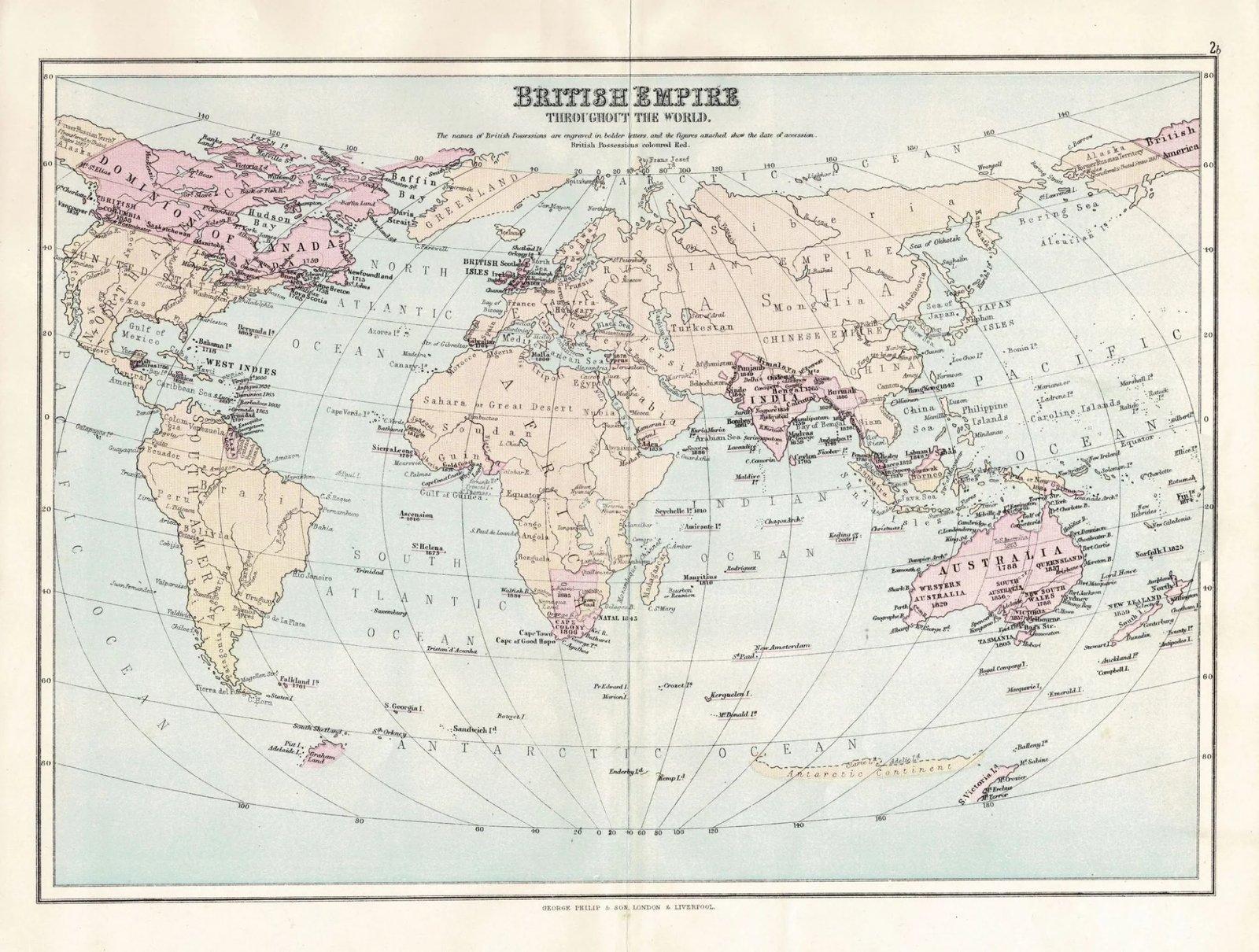
This is not a tale of one genius king or one lucky war. It is a story of trade, guns, debt, and people who refused to stay ruled. Watch who gets rich. Watch who pays. Follow the ships — but also follow the unpaid labor that made those ships pay.
Sea Dogs, Chartered Companies, and the Triangle
Britain did not start as a world power. In the late 1500s, England was a mid-sized kingdom with a strong navy and a hunger for gold, while Spain and Portugal already held vast lands across the ocean. English sea raiders struck Spanish ships, and in 1588 the Spanish Armada failed to invade England. Survival was not yet a British Empire — but it fed a belief that the sea could be England’s shield and its path to wealth.
In 1600, merchants founded the East India Company: a private firm with a royal charter that, over time, gained the right to raise troops and make war. A company that began as a trading venture would one day rule millions. That blurry line between business and government would shape British rule for centuries.
Across the Atlantic, settlers built colonies in North America and the West Indies, where sugar — and later cotton — made huge profits. Those crops rested on forced African labor. Ships carried people as cargo; families were torn apart, and death rates on some crossings were terrible. The wealth of British ports and banks was linked to this trade long before most schoolbooks made that link clear. Bristol, Liverpool and London grew rich on the triangle: goods left Britain for West Africa, captive people were forced across the ocean, and sugar and other crops came back. The system was cold and planned.
It was not a side note to British growth — for a long stretch of time, it was a core part of how money moved. And the forced people resisted, in many ways, while planters and British forces answered with harsh laws. The story of British wealth is also the story of people who refused to be only victims.
Britain fought other European powers for trade and land; wars with the Dutch and the French were also fights over sugar islands, fur routes and Asian markets. In 1763, after the Seven Years’ War, Britain took New France and Canada and grew stronger in India. On paper it looked like triumph. In practice, victory brought new costs: more land to hold, more taxes to raise, and more anger among people who had not chosen British rule.
Losing America — and Building a Second Empire
In the thirteen American colonies, that anger turned into revolution. Colonists protested taxes and limits on their own assemblies; they spoke the language of British rights, then used it against Britain itself — many of them still holding people in slavery while they claimed liberty, a clash that sits inside the founding story, not outside it. In 1776 the colonies declared independence; with French help, they won, and in 1783 Britain accepted the United States. Losing America was a shock. Yet British rule did not die. It shifted. India, Australia and new trade posts became the next great project: a first wave of the British Empire had fallen, and a second was already rising.
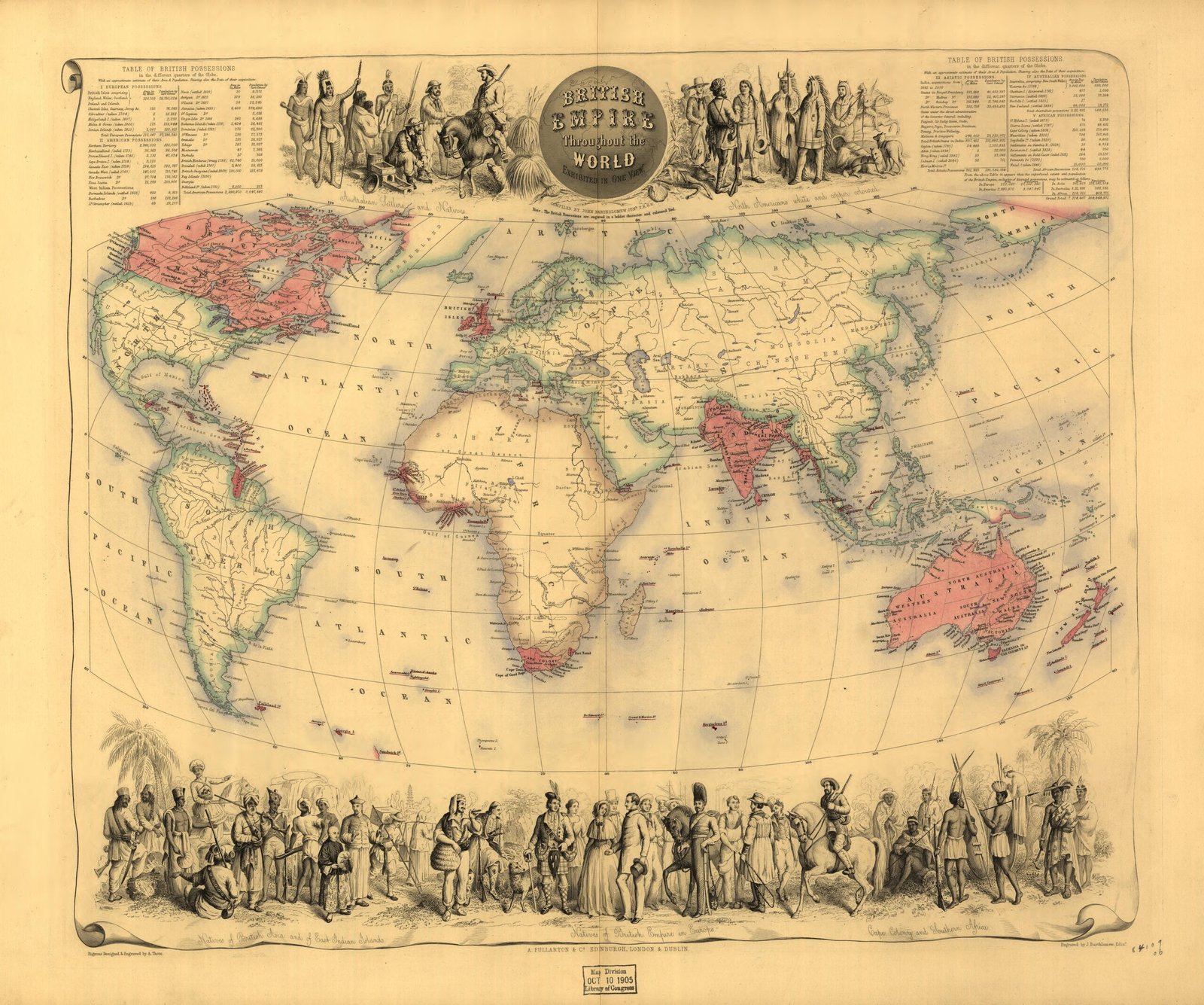
Canada remained under British rule and grew, though French-speaking communities kept their faith and tongue, and Native peoples faced broken treaties and loss of land as settlement spread. The Hudson’s Bay Company pushed trade deep inland — power moved through companies here too, not only through governors. Australia began as a place to send convicts after America was closed as a dumping ground: in 1788 the First Fleet arrived near what became Sydney. Aboriginal peoples had lived on the continent for tens of thousands of years; British settlement brought disease, loss of land and violence, and the later story of “empty land” erased people who were already there.
New Zealand followed a related path — the Treaty of Waitangi in 1840 is still argued over today. British rule often arrived with papers that promised protection; those papers rarely meant equal power. Flags rose faster than justice. In the West Indies, even after slavery ended, many freed people faced low pay and closed options, while indentured workers from India and elsewhere were brought in under tough contracts. Freedom on paper and freedom in daily life were not the same.
How Did a Company Rule India for the British Empire?
In India, the East India Company did not simply trade. It took sides in local wars and collected taxes. After the Battle of Plassey in 1757, company power grew fast in Bengal — and graft and harsh tax demands helped deepen the famine of 1770. Exact death totals are still debated, but the human cost was vast. Company rule was not a gentle tool; it was a machine for profit with an army behind it. Around 1799 Britain defeated Tipu Sultan of Mysore and kept pressing other Indian powers, and by the early 1800s the firm was the main armed force across large parts of the subcontinent. Indian soldiers — sepoys — served in its army, and Indian taxes paid for British wars.
The British Empire was never only white men on ships: it also ran through Indian clerks, soldiers and partners.
At home, Britain was changing too. Coal, factories and steam remade work, the navy protected trade, and London became a center of world finance. Factory power and sea power fed each other: cotton from slave-grown fields in America, and later from India and Egypt, filled British mills. The “workshop of the world” rested on materials and markets far beyond Britain itself. Steamships cut travel time; the telegraph moved orders across oceans; British banks and insurers backed distant ventures. Workers in British cities faced long hours, child labor and foul air, and reformers fought for better laws — a real fight, which does not erase the fact that cheap raw goods from abroad helped make British goods cheap to sell.
In 1833, Parliament passed the Slavery Abolition Act. It took effect on 1 August 1834 across most of the British Empire — though not in the East India Company’s territories — and it was a real change, forced by revolts, campaigners and shifting economics. But freed people over the age of six were first bound into an unpaid “apprenticeship” that lasted until 1838; the slave-owners, not the enslaved, received £20 million in compensation, about 40 percent of the government’s yearly budget at the time; and Britain still ruled millions who had no vote in London. Britain then cast itself as a moral police force on the seas, stopping other nations’ slave ships.
That claim was real in part — and it was also useful power. A British Empire built with slavery later sold itself as the British Empire that killed the slave trade.
Opium, Mutiny, and the Raj
The mid-1800s brought new shocks in Asia. After the First Opium War, the Treaty of Nanking in 1842 forced China to open five ports to British trade and hand over Hong Kong; after a second war, a treaty of 1858 forced China to legalize the opium imports it had tried to ban. “Free trade,” in this case, meant the right to sell a drug China had tried to stop. Power wrote the rules, then called them law.
In India, anger at company rule — over religion, pay and lost status — helped fuel the great rising of 1857 — the Indian Rebellion, which the British called the Mutiny. The British crackdown was savage, and whole towns paid a price. In 1858 the Crown took direct control from the company: the Raj had begun, and Queen Victoria was later named Empress of India. The show of rule grew even as pushback never fully died. Railways and law courts spread — so did famines under British tax and grain systems. Critics then and now ask a hard question: if British rule brought progress, why did so many still go hungry while grain left the ports?
Durbar pageants and royal tours put the British Empire on display, and newspapers at home printed maps in bold red. Many British children grew up seeing the world as a set of places that existed to serve the mother country. That story made conquest feel normal.
The Scramble, Suez, and the Peak
Africa became the next great prize. European powers carved the continent at meetings like the Berlin conference of 1884, and Britain took large zones — from Egypt and the Sudan to South Africa, Nigeria, Kenya and more. Missionaries, traders and soldiers all played roles, and so did local allies and rivals. Diamonds and gold in southern Africa raised the stakes. Some African rulers tried to play Europe’s powers against each other; some signed treaties under pressure; some fought, and lost. The map drawn in Europe often ignored the languages, farms and nations already on the ground — and borders drawn for the British Empire later became the borders of new states.
Wars against the Zulu and later the Boers showed how costly so-called small colonial fights could become; the South African War at the turn of the century used camps that held Boer families, where disease killed thousands. The methods shocked parts of the British public itself. The British Empire’s tools were not only ships and trade; they included hard war against whole groups of people.
In Egypt, Britain seized real control after 1882, saying it had to protect the Suez Canal and the money Egypt owed. The canal was the shortcut to India, and debt and strategy pulled Britain deeper into the Middle East and North Africa; local rulers kept their thrones, but real power often sat with British advisers.
By around 1920, after the First World War, British rule reached its greatest formal size: about 35 million square kilometres, roughly a quarter of the world’s land. (In 1913 the British Empire held about 412 million people, around 23 percent of the world’s population.) Britain and its dominions had fought Germany together; hundreds of thousands of men from India, Africa, the West Indies and the settler dominions had served and died. New mandates in the Middle East came from defeated Ottoman lands, and on the maps the red looked endless. But in the Middle East, Britain’s wartime promises pulled in different directions: Arabs who had fought the Ottomans wanted independence, while Britain also backed a Jewish national home in Palestine.
Those crossed promises fed conflicts that outlasted the British Empire itself. The war had drained British wealth and lives, and colonies that had bled for Britain asked what they would get in return. Songs and posters had praised loyalty; after the guns fell silent, loyalty demanded a price — more voice, more rights, and in time, freedom.
How Did the British Empire Unravel?
Ireland showed the limits first: after years of conflict, most of Ireland left the United Kingdom in the early 1920s. The dominions — Canada, Australia, New Zealand, South Africa — gained more self-rule, and the 1931 Statute of Westminster recognized their right to make their own laws. The system was becoming a commonwealth of unequal members, some far freer than others.
In April 1919, at Jallianwala Bagh in Amritsar, troops under a British general fired on an unarmed crowd; the official count was 379 dead, and Indian estimates were far higher. The massacre turned many moderate Indians against British rule for good. In the years that followed, mass movements grew under leaders like Gandhi and many others who did not all share one plan. Boycotts, marches and arrests filled the news; Britain promised, then delayed, real power. The Second World War changed the map again. Britain needed Indian soldiers and supplies, yet struggled to hold the country; Congress launched the Quit India movement in 1942, and the crackdown was hard — but the promise of post-war freedom became impossible to take back.
Japan’s early victories in Asia shattered the myth of European strength: Singapore fell in 1942, a shock that echoed across the colonized world. In 1943, famine in Bengal killed an estimated two to three million people, made worse by wartime decisions in Delhi and London. Britain finished the war on the winning side, but deep in debt, above all to the United States. Keeping a global British Empire by force looked less and less possible.
In 1947, India and Pakistan became free. Partition brought mass flight and terrible violence: somewhere between 10 and 20 million people were uprooted, and estimates of the dead range from about 200,000 to two million. The human tragedy of the end of British India is part of the British Empire’s last chapter, not a side note. Burma and Ceylon followed. The jewel of the British Empire was gone, and the rest of the structure began to shake. In 1956, Britain and France, with Israel, attacked Egypt after Nasser took over the Suez Canal — and pressure from the United States and world opinion forced a halt.
Suez showed that Britain could no longer act as a solo global power; the age of gunboat certainty was over.
Across Africa and the West Indies, freedom movements pressed hard. Ghana, in 1957, became the first British colony in sub-Saharan Africa to win independence; through the 1960s, colony after colony raised new flags — Jamaica, Trinidad, Nigeria, Kenya and many more. Some exits were negotiated, some were stained by war. The “Wind of Change” speech in 1960 admitted what protests and wars had already made clear. Still, London tried to leave behind friendly elites, bases and trade ties — freedom with strings, and also with hope.
In Kenya, during the Mau Mau emergency of the 1950s, tens of thousands of people were held in detention camps where prisoners were tortured; in 2013 the British government expressed regret and agreed to pay about £20 million to more than 5,000 surviving victims. In Malaya, independence came in 1957 in the middle of a long counter-insurgency, the Malayan Emergency, which did not officially end until 1960. The British Empire’s end was not one neat ceremony but a wave of revolts and wounds that still shapes politics today. Rhodesia’s white minority declared its own independence in 1965 rather than accept majority rule; only in 1980 did Zimbabwe emerge after a bitter fight.
Hong Kong returned to China in 1997 — by then, formal British rule was mostly gone. What remained were small territories, and a long shadow.
The Shadow — and the Question
That shadow is still with us. English spread as a global tongue; common law and parliament forms traveled wide — and so did racial ranking, partition borders, and trade patterns that favored the home country. Museums in Britain still hold objects taken under the British Empire, and fights over statues, repayments and schoolbooks are fights about memory as much as about the past. People moving after the British Empire also remade Britain itself: people from the West Indies, South Asia, Africa and elsewhere came to work and build new lives; they faced racism and closed doors, and they also changed British culture from within. The British Empire did not only happen “over there” — its human results came home.
Britain did not rule the world alone. It ruled through partners — companies, churches, local elites — and through millions of colonial subjects who served, resisted, adapted or were crushed. Some Britons attacked that rule in their own time; many more took its profits as normal. And colonized peoples were not only victims in someone else’s story: they were actors who remade their own futures. So how did a small island build the largest empire on Earth? Through sea power, money, factories — and a will to use force and law as tools of control. And why did it fall?
Because subject peoples resisted; because wars drained the treasury; because new great powers rose; and because the costs of holding the map finally outweighed the gains for those who had to pay them. None of this was inevitable. Leaders chose; subject peoples chose; the map changed because people made it change. The red on the map looked solid. It never was. The British Empire teaches a hard lesson: power can span oceans and still fail to answer a simple question from the people beneath it — who gave you the right to rule?
EMPIRE FILE
- Peak: Around 1920 — roughly a quarter of the Earth’s land and people
- Engine: Sea power, chartered companies (above all the East India Company: chartered 1600, stripped of its power in India 1858, dissolved 1874), finance and industry
- Turning points: 1783 (America lost) · 1858 (the Crown takes India) · 1947 (India and Pakistan free) · 1956 (Suez) · 1997 (Hong Kong handover)
- Built on: Trade and taxes — and enslaved and indentured labor across three centuries
- Ended by: Resistance in the colonies, two world wars’ debts, and new superpowers
How large was the British Empire at its peak?
The British Empire was the largest realm in history. A small island off Europe once ruled about a quarter of the people on Earth. By around 1920, after the First World War, British rule reached its greatest formal size: about 35 million square kilometres, roughly a quarter of the world’s land.
How did the East India Company help build the British Empire?
Merchants founded the East India Company in 1600 as a private firm with a royal charter. Over time it gained the right to raise troops and make war, and by the early 1800s it was the main armed force across large parts of India. In 1858, after the 1857 rebellion, the Crown took over and the Raj began.
When did the British Empire lose America and gain a second empire?
In 1776 the colonies declared independence; with French help they won, and in 1783 Britain accepted the United States. That first wave of the British Empire had fallen, but a second was already rising in India, Australia and new trade posts across the oceans.
When did India become independent from the British Empire?
India and Pakistan became free in 1947, ending British rule on the subcontinent that had passed from the East India Company to the Crown in 1858. Independence followed decades of campaigning and the strain of two world wars on the British Empire.
What was the Jallianwala Bagh massacre?
In April 1919, at Jallianwala Bagh in Amritsar, troops under a British general fired on an unarmed crowd. The official British count was 379 dead; Indian estimates were far higher. The shooting became one of the most infamous episodes in the later history of the British Empire.
Sources and further reading
- Encyclopaedia Britannica — British Empire
- British Empire — Wikipedia (extent and population figures, with citations)
- UK Parliament — The West Indian colonies and emancipation
- UK Parliament — East India Company and Raj, 1785–1858
- legislation.gov.uk — Slavery Abolition Act 1833 (as enacted)
- BBC News — Mau Mau torture victims to receive compensation (6 Jun 2013)
- Jallianwala Bagh massacre — Wikipedia
- Bengal famine of 1943 — Wikipedia
- The National Archives (UK)
More from History Not Taught
- The Entire History of Russia
- The American Civil War: How America Tore Itself Apart
- Can States End the Electoral College Without an Amendment?
