

They “Drank the Kool-Aid” — The Day 918 Americans Died in the Jungle
Content note: this article describes the deaths of more than 900 people, including 304 children. It is written to remember them accurately, not to sensationalise what happened.
You have probably said it yourself. At work. About politics. About a company, a movement, a man. “Don’t drink the Kool-Aid.” The phrase comes from Jonestown. It means: don’t follow blindly. Don’t swallow whatever you are told.
Key Facts
- On 18 November 1978, 918 people died in the Jonestown events: 909 at the settlement in Guyana, 5 at the Port Kaituma airstrip, and 4 in Georgetown. Three hundred and four of the dead were children.
- The drink used at Jonestown was not Kool-Aid. It was a cheaper mix called Flavor Aid, prepared in a drum with cyanide and sedatives.
- Congressman Leo Ryan was shot more than twenty times at the Port Kaituma airstrip and remains the only member of the United States Congress ever killed in the line of duty. In 1983 he was awarded the Congressional Gold Medal.
- Jim Jones led Peoples Temple, which had moved from Indianapolis to California and then to nearly 4,000 acres of leased jungle near Port Kaituma, Guyana.
- According to the Jonestown Institute at San Diego State University, 87 Peoples Temple members in Guyana survived 18 November, most of them because they were away from the settlement that day.
Table of Contents
November 18th is the anniversary of the day the phrase was born at Jonestown. And almost everything about it is wrong. It was not Kool-Aid — it was a cheaper drink mix called Flavor Aid. And the 918 people who died that day in the jungle of Guyana did not, most of them, choose to die. Three hundred and four of them were children. Some were held down and injected. All of them died inside a ring of armed guards. When it was over, the dead included a sitting member of the United States Congress — the only one in American history ever killed in the line of duty.
So how did ordinary Americans — grandmothers, nurses, teachers, babies — end up dead in a jungle clearing on the far side of another continent? And why do we still tell it as a joke about a soft drink? It starts, as these stories so often do, with a promise almost anyone would have believed.
How Did Jonestown Begin as a Church?
Indianapolis, 1955. A young preacher named Jim Jones opens a church, and from the very first day it is different. In a state where Sunday morning was the most segregated hour of the week, his congregation was Black and white together. He fed the hungry. He ran soup kitchens and nursing homes. He preached that heaven could wait — that God’s work was racial equality and dignity, here, now.
People believed him because, at first, much of it was real. In 1960 the mayor of Indianapolis put Jones in charge of the city’s Human Rights Commission. His Peoples Temple joined a respectable national denomination, the Disciples of Christ. Families joined by the hundreds — most of them African American, drawn by the one white preacher in town who treated them as equals.
Then the promise curdled into prophecy. Jones began preaching that America would be destroyed in a nuclear war, and in 1965 he moved about 140 followers to Redwood Valley, California, which he said would survive the fire. From there the Temple spread — San Francisco, Los Angeles — thousands of members, buses rolling up and down California. And Jones became powerful. In San Francisco, Temple volunteers could turn out voters by the busload, and politicians knew it. The Temple helped elect Mayor George Moscone in 1975, and Moscone rewarded Jones with the chairmanship of the city’s Housing Authority. The preacher from Indianapolis now sat at the right hand of power.
But inside the church a second story was being written — one of staged healings, of members signing over their homes and paychecks, of public punishments dressed up as discipline. The people who saw it first were the ones who left. And in the summer of 1977, they started talking to a reporter.
Why Did Jim Jones Flee to Jonestown?
The reporter was Marshall Kilduff of the San Francisco Chronicle. His investigation, written with Phil Tracy for New West magazine, carried former members’ accounts of beatings, fraud and fear. Before it was published, the magazine’s editor did something extraordinary: he telephoned Jim Jones and read him the entire article, word by word. Jones listened. And that night — that same night — he was gone.
He fled to a place he had been quietly preparing for years: nearly 4,000 acres of leased jungle in Guyana, in South America, near a river town called Port Kaituma — the Peoples Temple Agricultural Project. His people called it Jonestown. Hundreds followed him in what the Temple called Operation Exodus: more than 700 people in a single summer, grandmothers and infants among them, told they were escaping persecution to build a socialist paradise where no one would ever call them names again. By the end of 1977, about a thousand people were living in the clearing they had hacked out of the rainforest.
What they found was not paradise. The soil was poor, the crops struggled, and the food ran short almost at once. But that was not the worst of it. The worst of it was that Jonestown had been built — carefully, deliberately — so that no one could ever leave it.
Jonestown: A Paradise with Locked Gates
Listen to how it worked, because this is the part the joke leaves out. When you arrived in Jonestown, your passport was taken. Your money was taken. Your letters home were read, and rewritten, and sometimes never sent. The settlement sat six miles from the nearest town, ringed by jungle, patrolled by armed guards. And day and night, Jim Jones’s voice poured out of loudspeakers — sermons, lectures, warnings of enemies gathering in the trees — sometimes six hours a day, so that even sleep came with his voice in it.
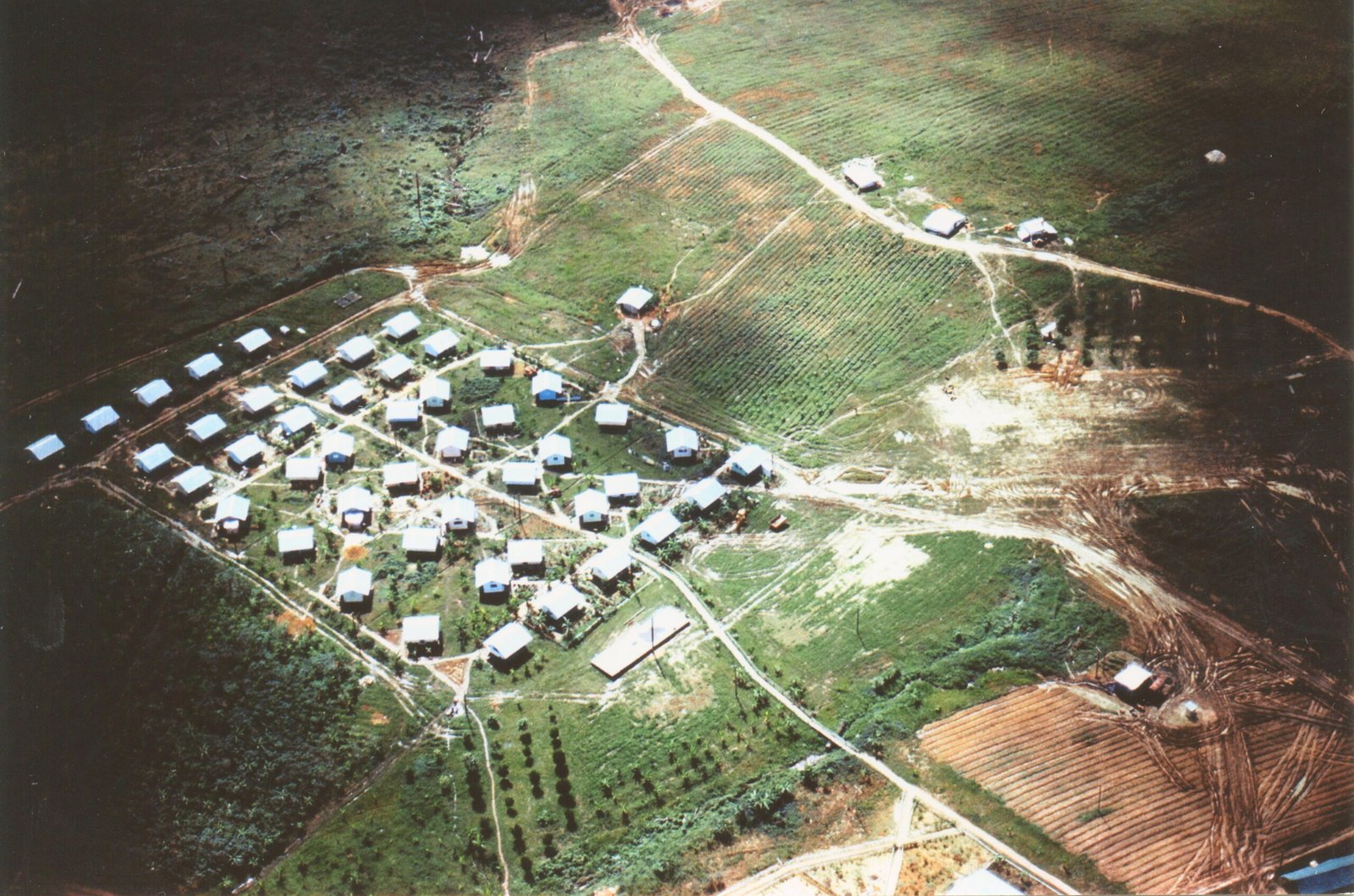
Residents worked the fields from seven in the morning until six at night, six days a week, in tropical heat, on rice and beans. And then there were the White Nights. A White Night was a rehearsal for the end: sirens in the dark, armed men going cabin to cabin, the whole population herded to the pavilion and told that mercenaries were in the jungle, that capture meant torture, that death was better. And at least once, everyone — including the children — was made to line up and drink a small glass of red liquid. They were told it was poison. They were told they would be dead in forty-five minutes. They drank.
And when nobody died, Jones smiled: it had only been a test of loyalty. But the real night, he warned them, was coming.
We know all this because one woman got out and wrote it down. Deborah Layton had been Jones’s trusted financial secretary. In May 1978 she escaped, and in June she signed a sworn affidavit for the United States government — thirty-seven points, under penalty of perjury, titled “The Threat and Possibility of Mass Suicide by Members of the People’s Temple.” She begged Washington to act before the rehearsal became real. Her warning reached U.S. officials — and nobody acted on it in time. Remember her name — because her own brother was still inside Jonestown. And what he would do there is coming.
The Fight over a Six-Year-Old
If you want the single thread that pulled tightest around Jonestown, it is not a doctrine or a drug. It is a little boy. John Victor Stoen was six years old. His parents, Grace and Timothy Stoen, had been Temple loyalists — Timothy was Jones’s own lawyer. But in 1972, in one of the Temple’s rituals of submission, Timothy had signed a paper declaring that Jim Jones was the boy’s true father. Jones never let that paper go.
Grace escaped the Temple in 1976, but John had already been sent to Guyana, beyond her reach. She went to court. In August 1977 a California judge gave her custody of her son and ordered Jones to produce him; a court in Guyana moved against Jones too. And Jones understood exactly what it meant: if one child could be taken back by law, every family in Jonestown could follow. The walls of his kingdom were made of other people’s children, and the law had found the door.
His answer tells you everything. When Grace’s lawyer arrived in Guyana in September 1977, Temple staff were ordered to telephone a senior Guyanese official with a message: stall this case — or the entire population of Jonestown would kill itself by three-thirty that afternoon. The case was delayed. The threat was called off. But Jones had shown the world his weapon, and the world had blinked. The Stoens joined forces with other desperate families — the Concerned Relatives — and together they found the one man in Washington willing to go and look for himself.
The Congressman Comes to Look
Leo Ryan was not a man who sent staff. The California congressman — re-elected to his fourth term just eleven days earlier — had a habit of investigating things with his own eyes; he had once gone undercover inside Folsom Prison to see conditions for himself. His district was full of Temple families. So in November 1978 he flew to Guyana with his young aide Jackie Speier, an American embassy official, worried relatives, and a press contingent — including an NBC News team.
On Friday, November 17th, they reached Jonestown. Jones had prepared a show: the band played, a fried-chicken dinner appeared — food the residents had not seen in months — and the congressman, being diplomatic, said kind things in public about what he had been shown. Then, in the middle of the performance, a resident named Vernon Gosney slipped a folded note to the NBC correspondent, Don Harris. The note was signed by Gosney and by a young woman named Monica Bagby, and it said: “Help us get out of Jonestown.”
Everything changed in that moment. Harris passed the note to Ryan. Quietly, others began to come forward. By the next afternoon, whole families — the Parks family, the Bogue family, more than a dozen people in all — had asked to leave with the congressman. Jones’s paradise was cracking open in front of television cameras. And then, as the departing group was being assembled, a Temple man named Don Sly seized Congressman Ryan and put a knife to his throat. The Temple’s own lawyers wrestled him down. Ryan was not cut — but everyone understood what the knife meant. The embassy man told Ryan to leave, and Ryan agreed: he would go, and come back for the rest.
What nobody on that truck knew was that the killing had already been decided. Riding with the defectors, smiling, suitcase in hand, was a quiet young man named Larry Layton — Deborah Layton’s brother. He was not defecting at all.
The Airstrip
Port Kaituma airstrip is a dirt strip in the jungle, about six miles from Jonestown. Two small planes were waiting: a Twin Otter, and a little six-seat Cessna. The defectors were boarding. Congressman Ryan was boarding. Don Harris and his cameraman were filming. Then a tractor rolled onto the strip, pulling a trailer. In the trailer were Temple gunmen.
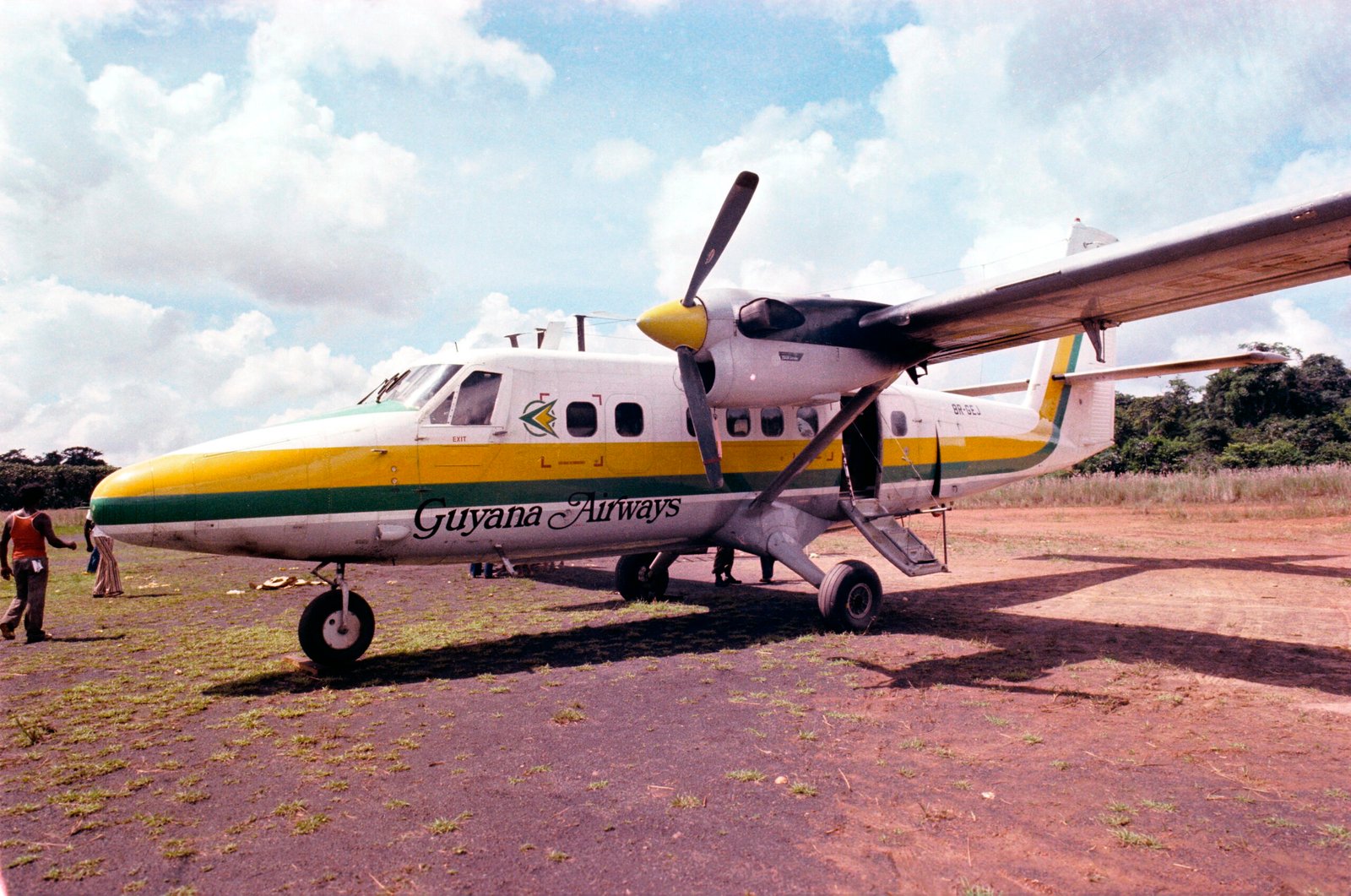
What happened next took only minutes. The gunmen opened fire at close range. Congressman Leo Ryan was shot more than twenty times. Don Harris — the NBC correspondent who had carried the note — was killed. So were his cameraman, Bob Brown, the San Francisco Examiner’s photographer Greg Robinson, and Patricia Parks, a mother who had chosen, that very hour, to walk out of Jonestown with her family. Jackie Speier was shot again and again and left for dead on the tarmac. She lived — and one day she would sit in Congress herself.
And inside the little Cessna, Larry Layton pulled out a gun and started shooting the defectors beside him. He shot Vernon Gosney. He shot Monica Bagby — the two people whose note had begged America for help. Then his gun jammed, and a defector named Dale Parks tore it from his hands. Five people were dead on the airstrip. Leo Ryan remains, to this day, the only member of the United States Congress ever killed in the line of duty; in 1983 his country gave him the Congressional Gold Medal. But that evening, in the jungle dark, the survivors could only hide in a café in Port Kaituma and wait for the gunmen to come back.
And six miles away, Jim Jones picked up a microphone — and announced to Jonestown that the congressman was dead, and that there was now no way out for any of them.
What Happened in the Last Hour at Jonestown?
A tape recorder was running in the pavilion that evening. The FBI catalogued the tape as Q042. It is forty-four minutes long, and historians treat it the way they treat few documents — because it records, in real time, a community being talked into its own grave. Jones told them the congressman’s murder meant soldiers would come, that their children would be taken and tortured, that there was only one door left. He called it “revolutionary suicide” — not death, he insisted, but protest.
And then, one voice answered him. Christine Miller was sixty years old, a Black woman from Los Angeles who had followed Jones across a continent and an ocean. On that tape, she is the only person who argues. She asks him: “Is it too late for Russia?” — the Temple had once dreamed of an airlift to the Soviet Union. She says that as long as there is life, there is hope. She says they have a right to their own destiny. The crowd shouts her down. And finally she reaches for the one thing she thinks might move him: she asks him if he wants to see little John — six-year-old John Victor Stoen — die too.
Jones answers that John is no different to him than any other child there. After that, Christine Miller’s voice is heard no more. She died at Jonestown that evening, with the people she had tried to save.
What followed, we will describe plainly, because the dead deserve plain speech. A drum had been prepared: grape Flavor Aid, cyanide, sedatives. The children were brought first. Babies had the poison squirted into their mouths with syringes. Parents were made to give it to their own children, and then to take it themselves, while armed guards stood around the pavilion and Jones’s voice came over the loudspeakers, urging them to hurry, telling them to die with dignity. Some went believing. Some went weeping. Some — the needle marks found later, many between the shoulder blades where no one can reach on their own body, tell us — did not go willingly at all.
Jim Jones did not drink. He was found in the pavilion, dead of a gunshot wound to the head; who fired it has never been settled. In Georgetown that same hour, acting on his radioed order, a loyal follower named Sharon Amos killed her three children and herself — while Jones’s own sons, in the capital with the Temple basketball team, refused to pass the order on and ran to the American embassy for help. And still, in the middle of that hour, a few people simply refused to die. A teacher named Odell Rhodes volunteered to fetch a stethoscope — and hid under a building instead.
A kitchen worker named Stanley Clayton talked his way past the guards and ran for the jungle. A seventy-nine-year-old man, Grover Davis, hard of hearing, had never heard the summons at all, and lay still in a ditch. And a seventy-six-year-old woman named Hyacinth Thrash stayed in her cottage — and walked out, when it was finally quiet, into a world where her sister and everyone she knew lay dead.
The Living and the Dead
When Guyanese soldiers walked into Jonestown the next morning, the first count of the dead was just over four hundred. Then the count began to climb — five hundred, seven hundred, seven hundred and eighty — because the dead lay in family groups, in layers, the children beneath the adults. The final number was 909 in Jonestown; 918 in all, in a single day — the largest deliberate loss of American civilian life until September 11th, 2001.
The bodies were flown home to Dover Air Force Base in Delaware, and there the second tragedy began. In the jungle heat, identification had become almost impossible. More than 200 of the children were never identified at all. About half the dead were claimed by their families. The rest — 408 people, most of them children — waited six months in a military mortuary, until a group of San Francisco churches fought for the right to bury them. They lie today in a single hillside grave at Evergreen Cemetery in Oakland, California. In 2011, four granite plaques were set into that hillside with all 918 names — every name, including, after long argument, the name of Jim Jones.
According to the Jonestown Institute at San Diego State University, 87 Peoples Temple members in Guyana survived November 18 — most of them because they were away from the settlement that day. Only a handful of people who were inside Jonestown during the deaths lived. The sister who had warned the government, Deborah Layton, lived to write it all down. Her brother Larry was the only person ever prosecuted in the United States: convicted in 1986 of conspiring in Congressman Ryan’s murder, he served eighteen years and was released in 2002. Nine days after the massacre, San Francisco reeled again — Mayor George Moscone, the man who had raised Jim Jones to power, was assassinated at City Hall, alongside Supervisor Harvey Milk.
The killer, former supervisor Dan White, had no connection to the Temple — but for a city already in mourning, it felt as if the shadow would not lift.
Above Jim Jones’s chair in that pavilion there hung a sign. It is there in the photographs, above the empty seat, and it reads: “Those who do not remember the past are condemned to repeat it.” Every November 18th, the survivors still gather on that Oakland hillside — fewer every year — to read the names aloud. Nine hundred and eighteen names. Three hundred and four of them children, who never chose anything.
So the next time you hear someone laugh and say “don’t drink the Kool-Aid” — remember that it wasn’t Kool-Aid. Remember that it wasn’t, for most of them, a choice. And remember that the people of Jonestown were not fools in a punchline. They were people who believed a promise — and the whole duty of the rest of us is simply to remember them accurately.
JONESTOWN FILE
- Date: 18 November 1978
- Dead: 918 in all — 909 at Jonestown, 5 at the Port Kaituma airstrip, 4 in Georgetown
- Children among the dead: 304
- Temple members in Guyana who survived: 87 (Jonestown Institute count) — only a handful were inside Jonestown during the deaths
- Rep. Leo Ryan: the only US congressman ever killed in the line of duty; Congressional Gold Medal, 1983
- Unidentified: more than 200 children; 408 unclaimed dead buried together at Evergreen Cemetery, Oakland
How many people died at Jonestown?
918 people died on 18 November 1978: 909 at Jonestown itself, 5 at the Port Kaituma airstrip, and 4 in Georgetown. Three hundred and four of the dead were children. Some were held down and injected. The deaths happened inside a ring of armed guards, not as a simple mass suicide.
Was the drink at Jonestown actually Kool-Aid?
No. The phrase “don’t drink the Kool-Aid” comes from Jonestown, but the mix in the drum was a cheaper product called Flavor Aid, prepared with cyanide and sedatives. The slogan is also misleading in another way: most of the 918 people who died that day did not simply choose to die.
Who was Congressman Leo Ryan and why was he at Jonestown?
Leo Ryan was a U.S. congressman who flew to Guyana in November 1978 with his aide Jackie Speier, relatives, and reporters to look at Jonestown himself. After a visit, gunmen attacked his party at the Port Kaituma airstrip. Ryan was shot more than twenty times and died, the only member of Congress killed in the line of duty.
When did the Jonestown massacre happen?
The killings took place on 18 November 1978 in the jungle of Guyana, at the Peoples Temple Agricultural Project known as Jonestown, and at the nearby Port Kaituma airstrip. Jim Jones had led his followers there after leaving California. Every 18 November, survivors still gather at a memorial in Oakland.
How many people survived Jonestown?
The Jonestown Institute at San Diego State University counts 87 Peoples Temple members in Guyana who survived 18 November 1978, most of them because they were away from the settlement that day. Only a handful escaped the pavilion itself once the killings began that evening.
Sources and further reading
- FBI Records: The Vault — Jonestown
- Jonestown Institute, San Diego State University — How many people survived November 18?
- Jonestown Institute — Affidavit of Deborah Layton Blakey (June 1978)
- Jonestown Institute — Alternative Considerations of Jonestown & Peoples Temple (home)
- U.S. House of Representatives, History, Art & Archives — Representative Leo Ryan of California
- Jonestown — Wikipedia (overview with full citations)
More from History Not Taught
- Capsized in 22 Minutes — The Miracle on the Mississippi
- The American Civil War: How America Tore Itself Apart
- America’s Fastest Ocean Liner Was a Secret Troopship
