
The Entire History of Russia — What Your Textbook Skipped
Russia is the largest country on Earth. Eleven time zones. One-eighth of all the inhabited land on the planet. And it began — if the old chronicle is telling the truth — with an invitation to a Viking.
Key Facts
- Russia is the largest country on Earth. The Russian Primary Chronicle says that in 862 the Varangian (Viking) Rurik was invited to rule; his successor Oleg seized Kiev in 882.
- In the winter of 1237, Batu Khan’s Mongol Golden Horde invaded. The Rus’ lands paid tribute for 240 years, until the Great Stand on the Ugra River in 1480.
- Ivan IV was crowned Tsar of All Russia in 1547, at sixteen. The Rurikid line ended in 1598 when his son Feodor died childless.
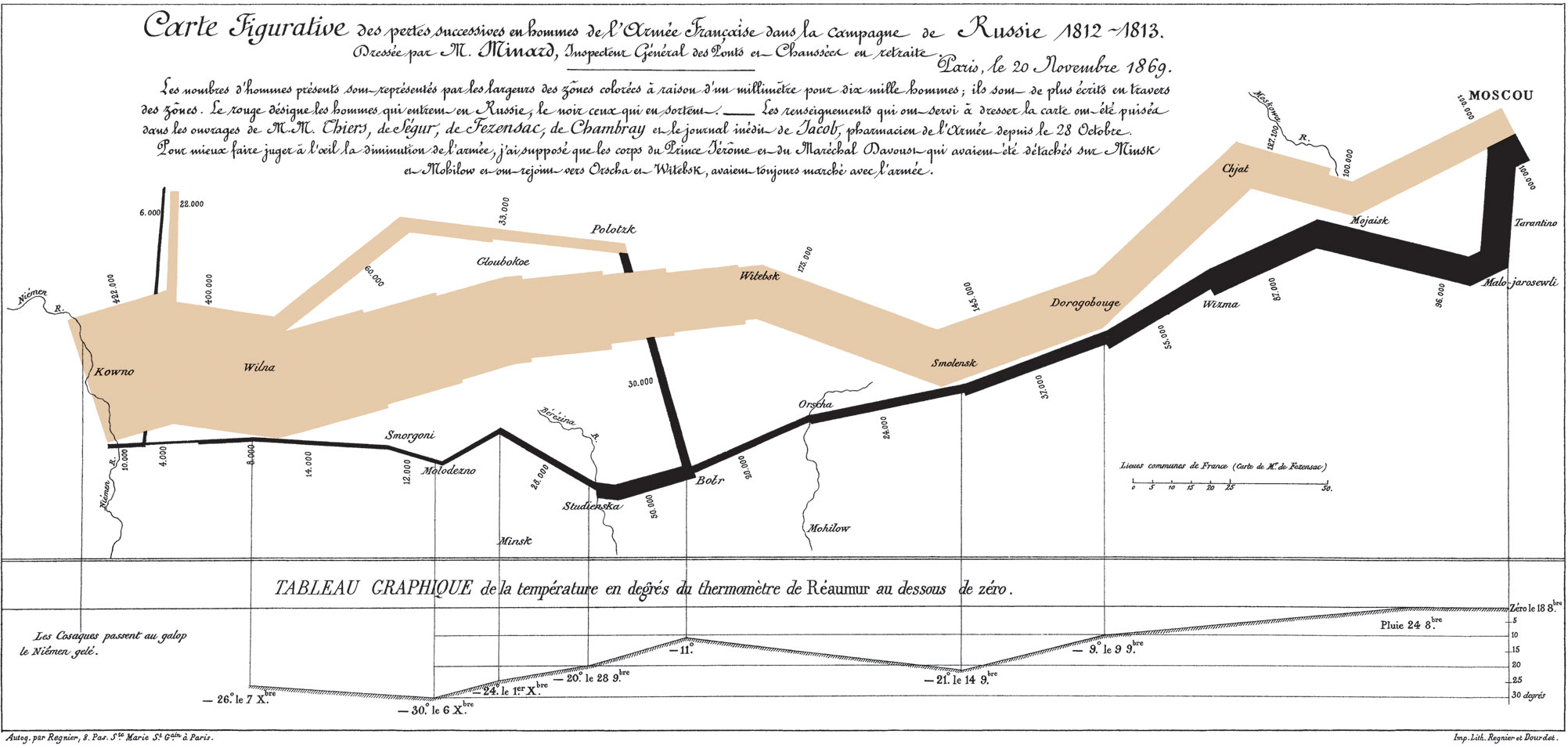
- In June 1812 Napoleon’s Grande Armée entered Russia: around 450,000 men in the first wave, and more than 600,000 in all. Barely 100,000 came back.
- Nicholas II, the last Romanov, abdicated in March 1917. The Soviet Union, formed after the Bolshevik seizure of power in October 1917, collapsed in 1991.
Table of Contents
Here is the claim you will hear about Russia: that no foreign army has ever conquered it. Napoleon tried. Hitler tried. It sounds like a legend. But it is almost true — and the “almost” is the whole story. Because in more than a thousand years, exactly one army ever truly conquered this land, broke it, and ruled it for two hundred and forty years. And Russia spent the next eight centuries making sure it never, ever happened again. This is the entire history of Russia: the Vikings who founded it, the storm that conquered it, the tsars who built it on fear, and the invasions that broke themselves against it. Watch for the pattern. Conquered once. Never again.
The Vikings: How Russia Began (862–1054)
Our story starts with a book. The Russian Primary Chronicle, written by monks centuries later, tells how in the year 862 the quarrelling tribes of the north sent a message across the Baltic Sea to the Varangians — the Vikings of Sweden: “Our land is great and rich, but there is no order in it. Come and rule over us.” And a Viking named Rurik came. Historians still argue about how much of that is legend, but the dynasty he founded — the Rurikids — would rule these lands for the next seven hundred years.
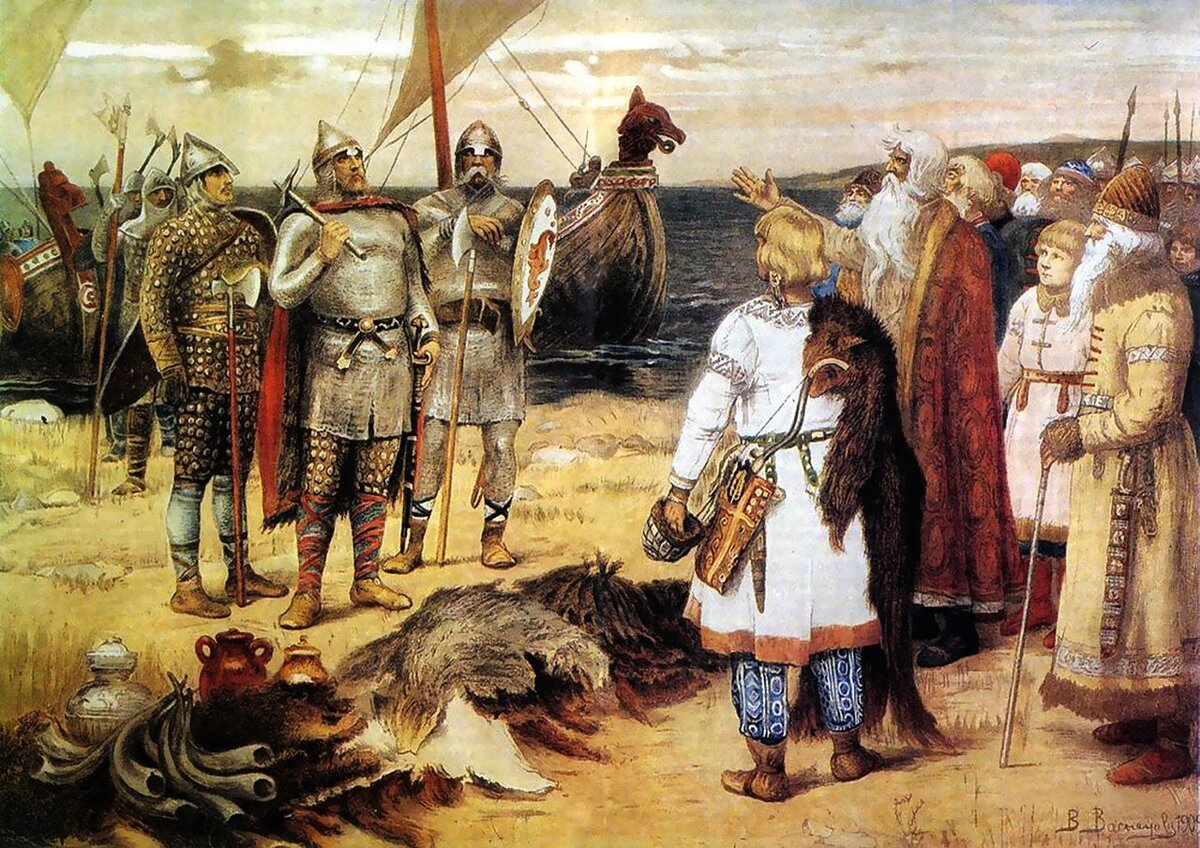
The state they built, Rus’, grew along the rivers. It was less a country than a trade route with an army: the road “from the Varangians to the Greeks,” running from the Baltic down the Dnieper River to Constantinople, the richest city in the world. In 882, Rurik’s successor Oleg seized a hill town on the Dnieper called Kiev and made it his capital — “the mother of Rus’ cities.”
Then came the decision that shaped everything. In 988, Prince Vladimir of Kiev chose a faith for his people. The chronicle says his envoys visited mosques, Catholic churches and the great cathedral of Constantinople — and in Constantinople they reported: “We knew not whether we were in heaven or on earth.” Vladimir chose the Orthodox Christianity of Byzantium, was baptised, and baptised his people in the river. In one generation, Rus’ tied itself to the Orthodox East, not the Catholic West. That fault line is still on the map today.
Under Vladimir’s son, Yaroslav the Wise, Kiev bloomed: the golden domes of St Sophia’s Cathedral, the first written law code, royal marriages reaching from France to Norway — a European great power, built by Vikings on a Slavic river. But it carried a fatal flaw: too many princes, one throne. Brother fought brother, Kiev was sacked by rival Rus’ princes, and by the 1100s the federation was splintering into a dozen jealous states — just as a rider was approaching from the east, from further away than anyone in Kiev could imagine.
The Mongol Storm: The One Conquest (1237–1480)
In the winter of 1237, the storm arrived. Batu Khan — grandson of Genghis Khan — led the Mongol Golden Horde across the frozen Volga. The Rus’ princes, divided, faced him one at a time, and fell one at a time. Ryazan burned. Vladimir burned. And in December 1240, the Horde reached Kiev itself. Kiev — the mother of cities, one of the great capitals of Europe — was annihilated. When a papal envoy rode through six years later, he counted fewer than two hundred houses standing. This was the one true conquest in Russia’s thousand years. Remember this moment. Everything after it is a reaction to it.
For two hundred and forty years, the Rus’ lands paid tribute to the Golden Horde — the period Russians call the Mongol Yoke. The khans did not garrison the towns; they ruled with tax censuses, hostages, and the power to grant or revoke a prince’s right to rule. Princes travelled to the Horde’s capital on the Volga to beg for their thrones. And yet, inside the cage, something grew. In the west, Alexander Nevsky of Novgorod smashed the Swedes on the Neva in 1240 and the German knights on the ice of Lake Peipus in 1242 — then wisely paid the Mongols, choosing survival over glory.
In the north-east, an unremarkable town called Moscow mastered the system: its princes won the right to collect the Horde’s tribute from all the others, and quietly skimmed power from every payment. In 1380, Moscow’s Prince Dmitry led a united Rus’ army onto Kulikovo Field and beat the Horde in a great open battle. The tribute resumed — but the spell was broken. A century later, in 1480, the two armies faced each other across the Ugra River for weeks — the Great Stand. The Horde blinked first, and rode home. No great battle. No treaty. After 240 years, the yoke simply ended. Conquered once. And the land that emerged from under it was no longer a federation of princes.
It was Moscow’s.
Ivan the Terrible: The First Tsar (1462–1584)
The prince who stood on the Ugra, Ivan III — Ivan the Great — spent his reign “gathering the Russian lands”: Novgorod, the proud merchant republic, annexed in 1478; rival principalities swallowed one by one. He married a niece of the last Byzantine emperor, rebuilt the Kremlin with Italian architects, and Moscow began whispering that it was the Third Rome — heir to the fallen Constantinople.
His grandson turned the whisper into a roar. Ivan IV came to the throne at three years old, grew up surrounded by feuding boyar families who poisoned and murdered around him, and in 1547, at sixteen, was crowned with a new title: not prince, but Tsar of All Russia — Caesar. The West knows him as Ivan the Terrible; the Russian word, grozny, means something closer to “formidable” — the kind of king who inspires awe. He earned both translations. In 1552, Ivan conquered Kazan, the Tatar khanate on the Volga — the first great expansion beyond the Slavic lands. St Basil’s Cathedral, those swirling candy domes on Red Square, was built to celebrate it.
Four years later Astrakhan fell, and the whole Volga — the artery of Russia — was his. An empire of many peoples had begun.
But the same reign rotted from inside. A twenty-five-year war for the Baltic failed. And in 1565 Ivan created the Oprichnina — a state within the state, run by black-clad horsemen who carried a dog’s head and a broom on their saddles: to sniff out treason and sweep it away. Cities that displeased him were destroyed; in 1570 his men sacked Novgorod and killed thousands of its people. Then, in 1581, came the moment that sealed the dynasty’s fate: according to the account contemporaries left behind, in a fit of rage Ivan struck his own son and heir with his staff — and the young Ivan died in his father’s arms days later.
The Tsar who made Russia an empire had killed its future with his own hand. When Ivan died in 1584, he left a broken heir, an empty treasury, and a country held together by fear alone. What happened next was worse than anything the Mongols had done.
The Time of Troubles: Russia Dies — and Refuses To (1598–1682)
In 1598, Ivan’s son Feodor died childless — and with him, the seven-hundred-year line of Rurik ended. Then the sky itself turned: in 1600, a volcano erupted in faraway Peru, and for three summers frost killed Russia’s crops in the fields. The famine of 1601 to 1603 killed around two million people — roughly a third of the entire population.
Into the collapse came pretenders. A man appeared in Poland claiming to be Ivan the Terrible’s youngest son, miraculously survived — the first of the False Dmitrys. Civil war followed: pretender against tsar, Poles against Cossacks, everyone against everyone. And in 1610, the unthinkable happened for the second time in Russia’s history — and the last: foreign troops took Moscow. Polish soldiers occupied the Kremlin itself. The Swedes held Novgorod. There was no tsar, no government, no Russia — just a map with armies on it.
And then Russia saved itself — from below. In Nizhny Novgorod, a butcher and merchant named Kuzma Minin stood up in the square and asked the townspeople to sell everything if they had to, and raise an army. They did. Under Prince Dmitry Pozharsky, that people’s militia marched on Moscow, and in the autumn of 1612 the starving Polish garrison in the Kremlin surrendered. Occupied — but not conquered. The country had been pulled back from death by its own people. In 1613, a national assembly elected a sixteen-year-old boy, Michael Romanov, as tsar. His family, the Romanovs, would rule for three hundred and four years.
While all this was happening, Russia was also quietly performing the greatest land grab in history. Fur traders and Cossacks were pushing east across Siberia — a wilderness bigger than Europe — chasing sable, “soft gold.” They crossed the whole continent in less than sixty years, reaching the Pacific Ocean by 1639. Russia was no longer a European state with an Asian frontier. It was becoming something the world had never seen: one country across two continents.
Peter the Great: The City Built on Bones (1682–1725)
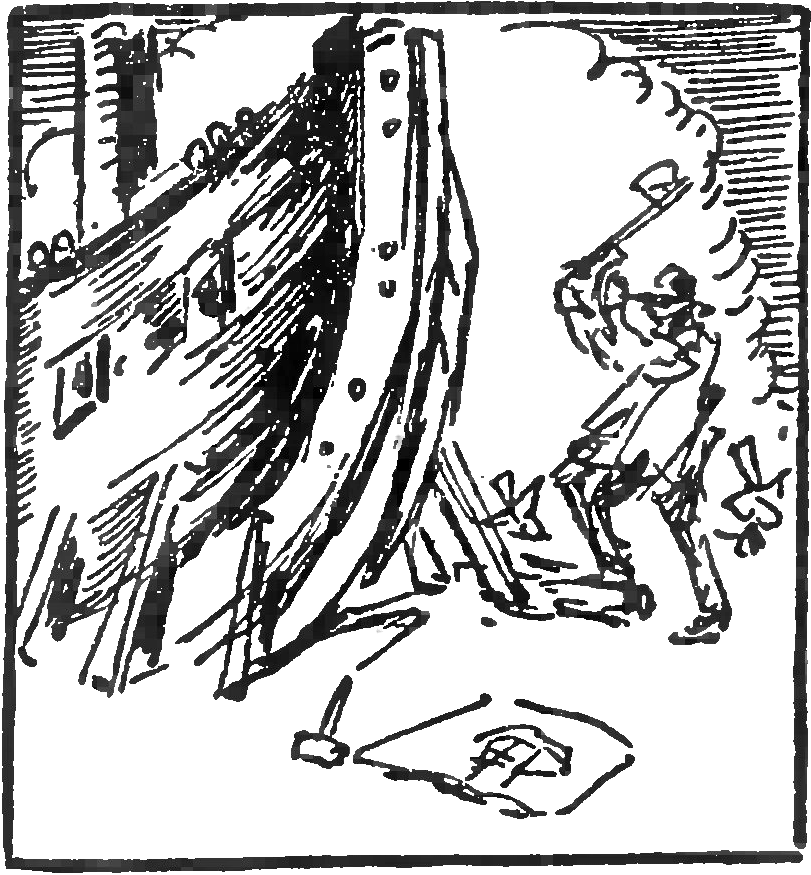
The first Romanov tsar’s grandson changed Russia more violently than anyone before or since. Peter — later “the Great” — was a giant of a man, nearly seven feet tall in the telling, obsessed with ships, tools and the West. As a young tsar he travelled to Holland and England in disguise, working with his own hands in the shipyards, and came home determined to rebuild Russia in Europe’s image — by force.
His instrument was war. In 1700 he attacked Sweden, then Europe’s military superpower — and at Narva, a Swedish army a fraction of his size destroyed his forces in a snowstorm. Peter’s response tells you everything about Russia in this story: he rebuilt. Peasants conscripted for life. Church bells melted down for cannon. A navy created from nothing. And in 1703, in the middle of that war, on swampy land just seized from Sweden, Peter began building a new capital: St Petersburg. It was built by conscripted labourers working in freezing marshes, and it devoured them — tens of thousands died building Peter’s city; historians still argue about the number, because no complete record of the dead was ever kept.
A city built on bones, as Russians still say. In 1709, at Poltava, Peter’s rebuilt army annihilated the Swedish king’s forces, and the balance of Europe flipped in a single summer’s day: Sweden’s century as a great power was over. Russia’s had begun.
When the war ended in 1721, Peter took a Roman title for a Russian throne: Emperor of All Russia. At home he taxed beards, dragged nobles into state service, founded schools, a navy, a senate, Russia’s first newspaper — and bound the peasants tighter into serfdom to pay for it all. He died in 1725, aged fifty-two, in the city he had willed into existence on a swamp. He left Russia unrecognisable: a European empire with a European capital — facing west, whether it liked it or not.
Catherine: The Empire Eats Poland (1725–1796)
Peter left no clear successor, and for decades the throne passed through palace coups — until 1762, when a German-born princess seized it from her own husband. Catherine II — Catherine the Great — ruled for thirty-four years. She wrote letters to Voltaire, bought up Europe’s art collections, posed as an enlightened philosopher-queen — and tightened serfdom on millions, because the nobles who kept her on the throne demanded it.
Her reign was one long expansion. Two wars against the Ottoman Empire won Russia the northern coast of the Black Sea. In 1783, Catherine annexed Crimea — the peninsula of the Tatar khans, the last heirs of the Golden Horde. The circle that began at Kiev in 1240 closed: the descendants of the conquered now ruled the lands of the conquerors. Then, with Prussia and Austria, Catherine performed the coldest act of the century: the Partitions of Poland. In three slices — 1772, 1793, 1795 — the three empires simply erased a kingdom of millions from the map. Poland would not exist again for one hundred and twenty-three years. Russia took the largest share.
But the empire’s foundations were rotten, and everyone knew it: in 1773, a Cossack named Pugachev — claiming to be Catherine’s murdered husband, miraculously alive — raised the largest peasant revolt in Russian history; for two years his army of serfs and Cossacks burned estates across the Volga before he was captured and executed in Moscow. The empire was now enormous — and resting on the backs of people who were legally property. That bill would come due.
1812: The Invasion That Ate Itself (1796–1856)
In June 1812, the greatest army Europe had ever assembled crossed into Russia: Napoleon Bonaparte’s Grande Armée. Around 450,000 men in the first wave; with reserves and reinforcements, more than 600,000 would enter Russia before the campaign ended. Against them stood an empire that had learned, across eight centuries, exactly how it survives.
Russia traded space for time. The armies retreated, and retreated, and the French advanced into emptiness — losing men to disease, desertion and hunger before they had fought a single major battle. At Borodino in September, the two armies finally collided in the bloodiest single day of the Napoleonic Wars. Napoleon took Moscow — and found a city emptied and burning, and a tsar, Alexander I, who simply refused to negotiate. The master of Europe sat in a ruined capital, waiting for a surrender letter that never came. So in October, Napoleon turned for home — into the Russian winter, along the same road his army had already stripped bare. The Grande Armée did not lose a great battle on the way out.
It dissolved: starved, frozen, hunted by Cossacks, it melted into the snow. Of the more than 600,000 men who had marched in, barely 100,000 came back. Most were not killed by Russians. They were killed by Russia — by distance, hunger and cold. Napoleon had repeated the one mistake the Mongols never made: he thought taking the capital meant taking the country.
Two years later, Russian troops marched into Paris. Russia stood as the strongest land power in Europe — the gendarme of the continent. But victory hid a rot. The officers who had marched to Paris had seen free societies, and in December 1825 some of them — the Decembrists — tried to force a constitution at bayonet point. They were crushed in a day. A generation later, in the Crimean War, Britain and France defeated Russia on its own Black Sea coast — and exposed the truth: a serf empire could not fight industrial nations. The giant had to change, or fall.
The Last Century of the Tsars (1856–1917)
Change came from the throne itself. In 1861, Tsar Alexander II did with one signature what no American president managed without a civil war: he freed the serfs. Twenty-three million people — legally property one day, free the next. It was flawed — peasants had to pay for their land over forty-nine years — but by the sheer number of people freed, it was one of the greatest acts of liberation of the nineteenth century. Six years later, the same empire sold Alaska to the United States for 7.2 million dollars, judging it indefensible and worthless. Even without Alaska, the empire at its late-nineteenth-century height covered about 22.8 million square kilometres — roughly one-sixth of the land on Earth.
And still it could not hold itself together. In 1881, Alexander the Liberator was blown up by revolutionaries — on the very day he had agreed to consider a national assembly. His successors answered reform with repression. The empire industrialised furiously — the Trans-Siberian Railway stitched Moscow to the Pacific in steel — but the cities filled with angry workers, and the countryside with land-hungry peasants. In 1905 came the warning: Russia lost a war to Japan — the first modern defeat of a European empire by an Asian power — and revolution erupted at home. The Tsar conceded a parliament, then strangled it.
In 1914, the empire marched into the First World War with the largest army in Europe and an economy that could not feed it. Defeat followed defeat; the bread queues of Petrograd grew longer than the trenches. In March 1917, ordered to fire on hungry crowds, the capital’s own soldiers refused — and Nicholas II, the last Romanov, abdicated. Three hundred and four years of dynasty, gone in a week. Not conquered by any foreign army. Collapsed from within — exactly as Kiev’s princes had, exactly as the Romanovs’ own line began, in the Time of Troubles.
The Red Bridge (1917–1991)
What happened next is a story large enough to need its own telling. Here is the bridge, in one breath. In October 1917, Lenin’s Bolsheviks seized the wreckage, shot the Tsar and his family in a basement, and won a civil war that killed millions. In 1922 they rebuilt the empire under a new name — the USSR — and under Stalin it industrialised at gunpoint, starved its own peasants by the million, and then faced the greatest test of the pattern this story has followed for a thousand years. In 1941, Hitler invaded with the largest army in history. The Soviet Union lost some twenty-seven million people — and was not conquered. Its armies took Berlin.
The empire that emerged was a superpower: first satellite, first man in space, an atomic arsenal to match America’s. Then it stagnated, bled itself in Afghanistan, and in December 1991 — without a single foreign soldier crossing its border — it dissolved. The largest country on Earth became fifteen countries overnight. And the largest of them, holding the old capital, the old army, and three-quarters of the land, was Russia again.
What Happened When the Soviet Union Fell in 1991?
Russia in the 1990s did something no invader had ever managed: it collapsed in peacetime. President Boris Yeltsin’s government freed prices overnight in January 1992, in a programme called shock therapy. Prices rose two and a half thousand percent in a single year; lifetime savings became worthless in months. Across the decade, Russia’s economy shrank by around forty percent — a collapse deeper than America’s Great Depression, achieved without a single bomb falling. In 1993 the crisis turned violent and the army shelled Russia’s own parliament building in the middle of Moscow. In 1998, the state defaulted on its debts and the rouble fell through the floor.
An empire that had survived the Mongols, Napoleon and Hitler was being undone by its own bank balance.
On the last day of 1999, Yeltsin resigned on live television, and power passed to his prime minister — a former intelligence officer named Vladimir Putin. What followed was recentralisation: the state retook control of the commanding heights, and a flood of oil and gas money refilled the treasury. By the mid-2000s, incomes had climbed back past where they had fallen from. Russia was smaller than the empire — but still the largest country on Earth, and it intended to act like it. In 2014, after revolution in Kyiv, Russia annexed Crimea — a move Ukraine and most of the world refused to recognise — and sanctions followed.
In February 2022, Russia launched a full-scale invasion of Ukraine: the largest war in Europe since 1945. As of this writing, that war is still being fought, and its ending is not yet history.
So end the thousand years where we began — with the map. A Viking trading post on a river became a federation, was conquered once, and answered that conquest with eight centuries of expansion and refusal: refusal to stay divided, refusal to surrender a capital and call it defeat, refusal to be conquered ever again. It has been an empire, a superpower, a ruin and a riddle — sometimes all in the same lifetime. The largest country on Earth is still there, eleven time zones wide, holding a history too big for any textbook. Which is why it was never taught. Until now.
RUSSIA FILE
- The one conquest: The Mongol Golden Horde, 1237–1480 — 240 years of the “Yoke”
- Founded: 862, Rurik and the Varangians; Kiev capital from 882; Orthodox baptism 988
- Dynasties: Rurikids (~700 years) → Romanovs (1613–1917, 304 years)
- Greatest extent: about 22.8 million km² in the late 1800s — roughly one-sixth of Earth’s land (Alaska had already been sold to the U.S. in 1867 for $7.2 million)
- 1812: 600,000+ of Napoleon’s men marched in; barely 100,000 came back
- 1941–45: Some 27 million Soviet dead — and still not conquered
- 1991: The USSR dissolved without a foreign invasion; Russia remains the largest country on Earth
How did Russia begin?
The Russian Primary Chronicle, written by monks centuries later, says that in 862 northern tribes invited the Varangian (Viking) Rurik to rule. In 882 his successor Oleg seized Kiev and made it his capital. Historians still debate how much of that origin story is legend, but the Rurikid dynasty ruled for about seven hundred years.
Did the Mongols really conquer Russia?
Yes. In the winter of 1237, Batu Khan, a grandson of Genghis Khan, led the Golden Horde across the frozen Volga. For 240 years the Rus’ lands paid tribute in the period Russians call the Mongol Yoke. In 1480, at the Great Stand on the Ugra River, that dominance ended.
What happened to Napoleon’s army in Russia in 1812?
In June 1812 the Grande Armée crossed into Russia: around 450,000 men in the first wave, and more than 600,000 in all before the campaign ended. Napoleon took a burned, empty Moscow, then retreated in October. Of more than 600,000 who had marched in, barely 100,000 came back.
When did the Russian Empire and the Soviet Union end?
The last Romanov, Nicholas II, abdicated in March 1917 after soldiers in the capital refused to fire on hungry crowds. In October 1917, Lenin’s Bolsheviks seized power. The Soviet state that followed lasted until 1991, when it collapsed and the Russia that remains took shape.
Who was the first tsar of Russia?
Ivan IV — known in the West as Ivan the Terrible — was crowned Tsar of All Russia in 1547, at the age of sixteen. The title meant “Caesar,” a step above prince. The Russian word grozny is closer to “formidable,” a king meant to inspire awe, not only cruelty.
Sources and further reading
- Encyclopaedia Britannica — Russia: history
- Encyclopaedia Britannica — Russian Primary Chronicle
- Mongol invasion of Kievan Rus’ — Wikipedia
- Russian Empire — Wikipedia (area, population and chronology)
- French invasion of Russia (1812) — Wikipedia
More from History Not Taught
- How Britain Ruled the World
- The American Civil War: How America Tore Itself Apart
- Can States End the Electoral College Without an Amendment?
